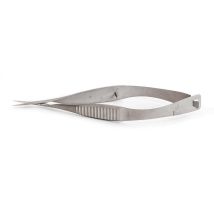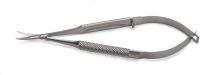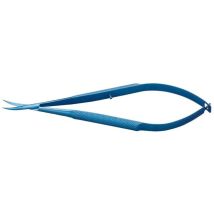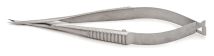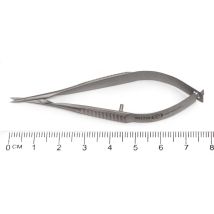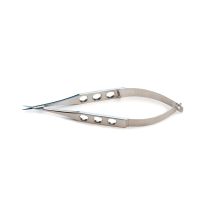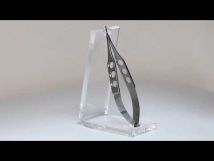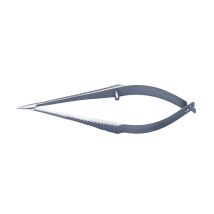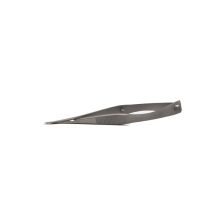
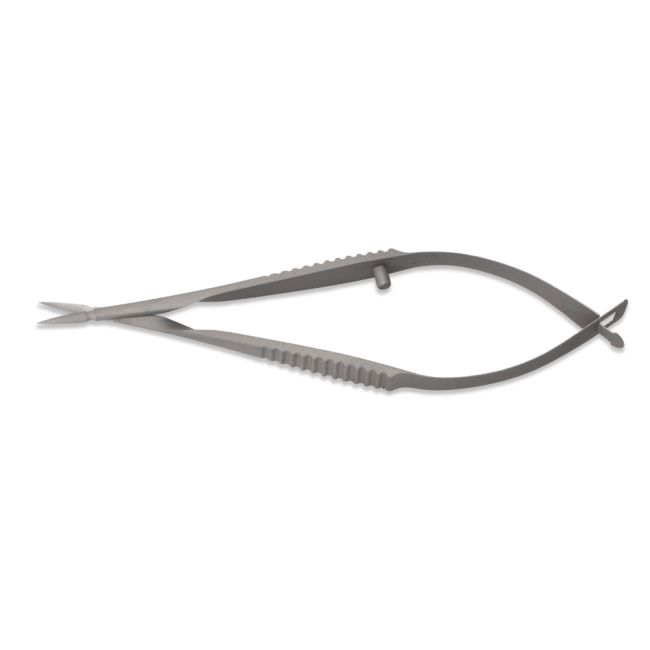
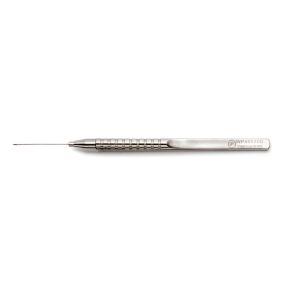
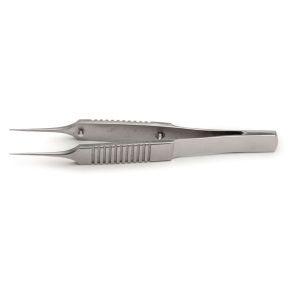
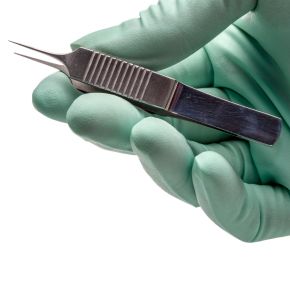
Vannas Spring Scissors, 8cm Long, 5mm Blades

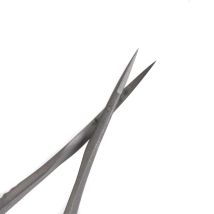
Our vannas scissors are specialized spring scissors designed for precision cutting and often used by scientific researchers. They are named after the Swedish scientist Gunnar Vannas who invented them in the 1940s. Compared with other spring scissors, vannas scissors are distinguished by their delicate, thin, sharp tips. The slender, pointed tips allows for precise cutting with minimal damage to surrounding tissues. Manufactured with surgical grade stainless steel, these scissors are durable and resistant to corrosion.
Features
- 8 cm (3.5") Long
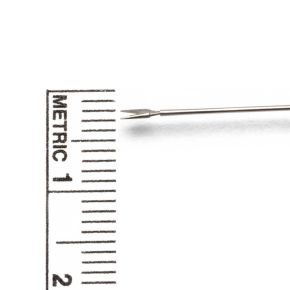
- 5 mm blades
- 0.1 mm tips
- Stainless steel
Options
| Order code | Stainless steel grade | Details |
| 14003 | Straight, Standard |  |
| 14003-G | Straight, German | |
| 14122 | Curved, Standard |  |
| 14122-G | Curved, German | |
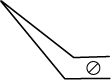
| 500260 | Angled, Standard | 45° angled to side
|
| 500260-G | Angled, German | 45° angled to side
|
| 501790 | Angled up, Standard | Angled up
|

Vannas scissors are popular choice for researchers in fields that require precision cutting, such as biology, neuroscience, and microsurgery. Common applications include:
- Microdissection of small organisms, such as insects or embryos
- Preparation of small tissue samples for histological analysis
- Cutting thin sections of cells/tissues for viewing under a microscope
- Preparation of brain slices for electrophysiological studies
- Dissection of small neural circuits
- Preparation of brain tissue for imaging or analysis
Customers who bought this also bought:
WPI Swiss made. Stainless steel, 0.1x0.06
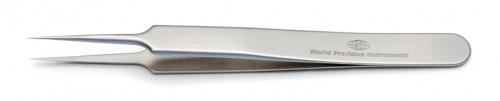
Iris forceps, curved, serrated tips, stainless steel
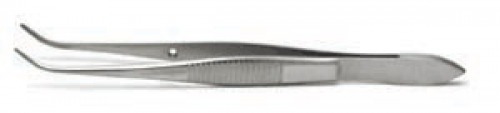
Wire retractor

| SKU | VAR-14003 |
|---|
- The Impact of Improper Instrument Handling in Labs
 Jul 15
 - Straight vs. Curved Surgical Scissors Jun 16
- What Are Laboratory Supplies? A Beginner-Friendly Overview Apr 08
- Modern History & Evolution of Hand-Held Surgical Instruments Mar 12
- Understanding the Types of Stainless Steel for Manufacturing Surgical Instruments Feb 04



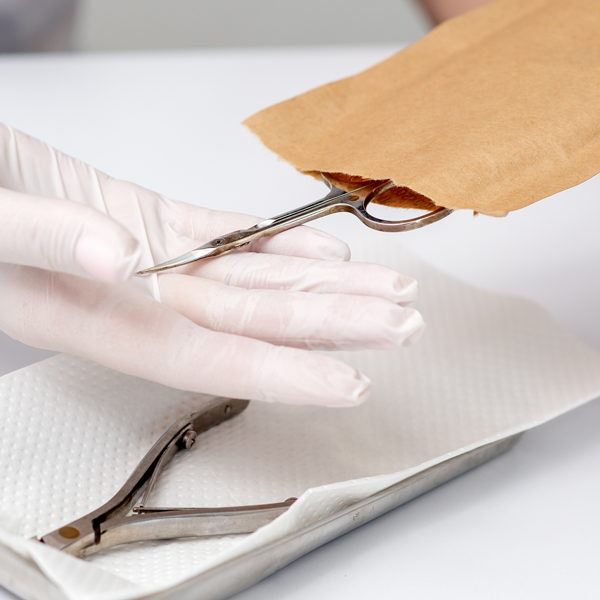

Oishi, P. E., Cholsiripunlert, S., Gong, W., Baker, A. J., & Bernstein, H. S. (2011). Myo-mechanical Analysis of Isolated Skeletal Muscle. Journal of Visualized Experiments, (48), e2582–e2582. http://doi.org/10.3791/2582
Anderson, C., Zhou, Q., & Wang, S. (2014). An Alkali-burn Injury Model of Corneal Neovascularization in the Mouse. Journal of Visualized Experiments, (86), e51159–e51159. http://doi.org/10.3791/51159
-
SuperCut Spring Scissors, 12.5cm
As low as $274.00 -
Katena-Vannas Spring Scissors, 11cm
As low as $295.00 -
McPherson-Vannas Spring Scissors, 7cm
As low as $274.00 -
McPherson-Vannas Spring Scissors, 8cm
As low as $285.00 -
Castroviejo Curved Scissors, 12cm, Titanium
As low as $277.00