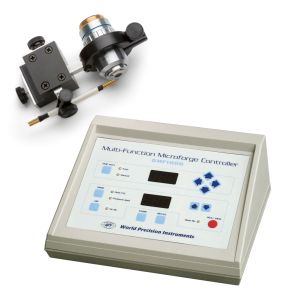
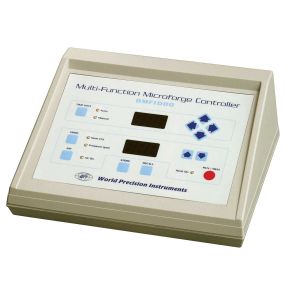
Analog Microforge

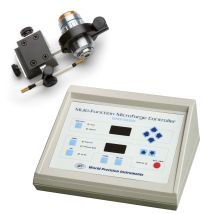
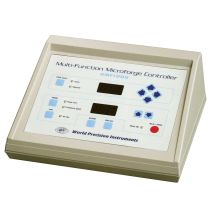
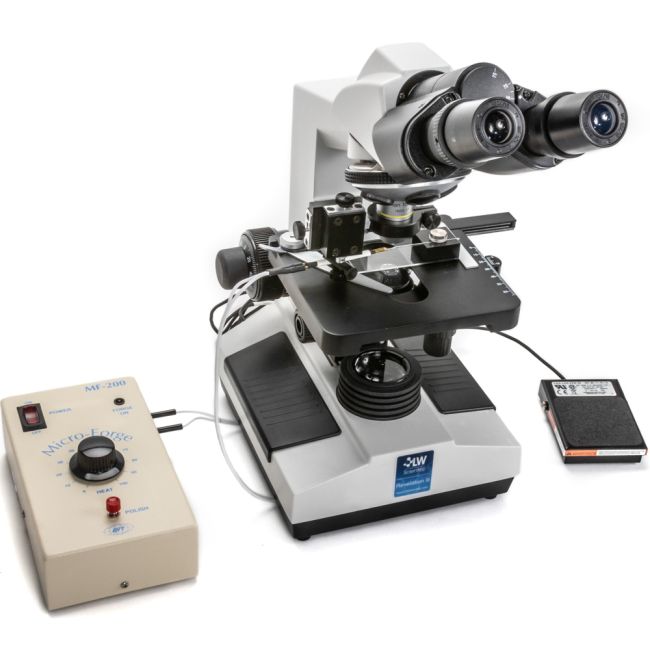
The MF200 Microforge is a versatile instrument designed specifically for the fabrication of glass micropipettes and other related tools. The system was developed in collaboration with Dr. Ming Li of the Department of Pharmacology, University of South Alabama. The MF200 is simple, reliable and economically priced.
Sometimes the simplest designs work best
Features
- Simple, reliable and economically priced
- Analog temperature controller
- W30S-LED microscope (optional)
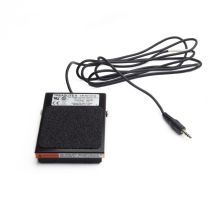
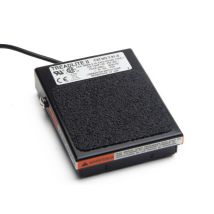
- Shown with MF200-FS foot switch (optional)
Options
| Order code | Power | Microscope |
| MF200-1 | 110V | Yes |
| MF200-2 | 220V | Yes |
| MF200-M1 | 110V | No |
| MF200-M2 | 220V | No |
Click here to view the current Data Sheet.
Click to view the pullers, bevelers, microforge application guide to compare all the units.
Benefits
- Includes 40x long-working distance objective and 10x eyepiece
- Kohler illuminator and Abbe condenser for less glare and sharper images
Applications
- Patch pipette tip polishing
- Micropipette tip size reduction
- Contact stretching in in vitro fertilization pipette production
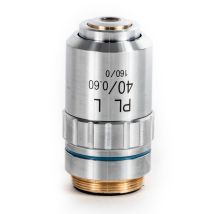
40X LWD objective included
The MF200 system includes:
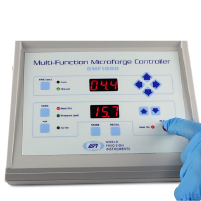
- An easy to use analog temperature controller
- A specially configured WPI model W30S-LED research grade compound microscope (optional)
- 40x long-working distance objective
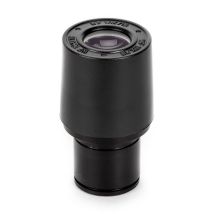
- 10x eyepiece
40x magnification is essential when polishing pipettes as small as half a micron (0.5 µm) in diameter. Compared to a conventional 40x objective, the long working distance objective reduces the danger of damage to the pipette and/or objective lens during the polishing process.
Kohler illuminator
It is also the only commercial microforge using the Kohler illuminator and Abbe condenser for illumination. This provides less glare and sharper image of the pipette than frosted glass illuminator, which was used on all of the other commercial microforges.
| SKU | VAR-3114 |
|---|
- As low as $185.00
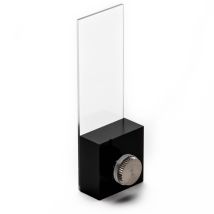
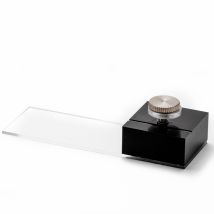
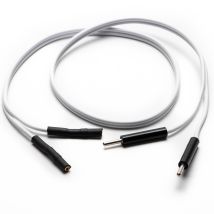
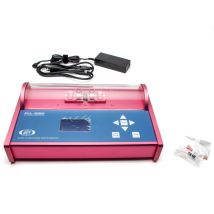
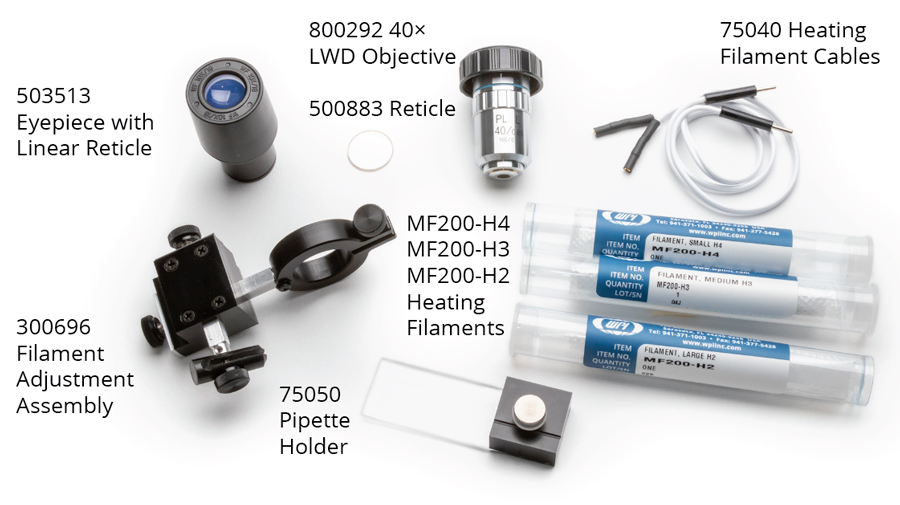
The image below shows the Microforge kit.
Video
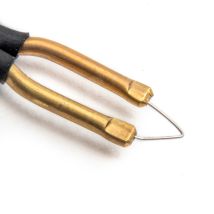
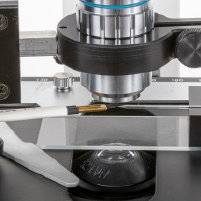
DMF 1000: Setting up the heating filament on the microscope
| AC POWER MODULE | 100-240 VAC 50/60 Hz |
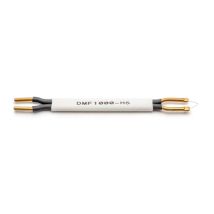
| FILAMENTS (3) | H2, H3, H4 |
| FILAMENT ON | Pushbutton Controlled or Optional Foot Switch Controlled |
| FILAMENT ADJUSTMENT ASSEMBLY | For 40x and 25x Long-Working, Distance Objectives: mounts on objective |
| FILAMENT ADJUSTMENT ASSEMBLY: OBJECTIVE | 40x Long-Working Distance (3 mm) |
| FILAMENT ADJUSTMENT ASSEMBLY: OPTIONAL | 25x Long-Working Distance (5 mm) |
| EYEPIECE | 10x (pair) |
| EYEPIECE: RETICLE (10x eyepiece only) (OPTIONAL) | 1.25 µm/division (at 40x), 0-90º Angle at 5º/division |
| EYEPIECE: OPTIONAL EYEPIECE | 15x (pair) |
| GLASS HOLDER | Mounts on Microscope Stage |
| DIMENSIONS: Control Unit | 4 x 7 x 1.875in. (10.2 x 17.8 x 4.8 cm) |
| SHIPPING WEIGHT | 3 lb. (1.4 kg) |
| MICROSCOPE: Note | See W30S-LED |
| MICROSCOPE: SHIPPING WEIGHT | 16 lb. (7.3 kg) |
Objectives Included
W30S-LED Microscope Objectives
- DIN Plan with 30-year anti-fungal coating
- 4X, 10X, 40X, 100XR (oil immersion)
- Parfocal, parcentric, color-coded
| Numerical Aperature | Magnification | Field of View | Working Distance | |
| 4X | 0.1 | 40X | 4.5mm | 17.5mm |
| 10X | 0.25 | 100X | 1.8mm | 6.7mm |
| 40X | 0.65 | 400X | 0.45mm | ~2.9mm |
| 100XR | 1.25 | 1000X | 0.18mm | 0.18mm |
Microforge LWD Objectives
| Numerical Aperature | Magnification | Field of View | Working Distance | ||
| Included | 40X | 0.65 | 400X | 0.45mm | 3mm |
| Optional | 25X | 0.25 | 250X | 0.72mm | 5mm |
Guillou, L., Babataheri, A., Puech, P.-H., Barakat, A. I., & Husson, J. (2016). Dynamic monitoring of cell mechanical properties using profile microindentation. Scientific Reports, 6, 21529. http://doi.org/10.1038/srep21529
Vasauskas, A. A., Chen, H., Wu, S., & Cioffi, D. L. (2014). The serine-threonine phosphatase calcineurin is a regulator of endothelial store-operated calcium entry. Pulmonary Circulation, 4(1), 116–27. http://doi.org/10.1086/675641
Pawlikowska-Pawlęga, B., Dziubińska, H., Król, E., Trębacz, K., Jarosz-Wilkołazka, A., Paduch, R., … Gruszecki, W. I. (2014). Characteristics of quercetin interactions with liposomal and vacuolar membranes. Biochimica et Biophysica Acta (BBA) - Biomembranes, 1838(1), 254–265. http://doi.org/10.1016/j.bbamem.2013.08.014
Koselski, M., Trebacz, K., & Dziubinska, H. (2013). Cation-permeable vacuolar ion channels in the moss Physcomitrella patens: a patch-clamp study. Planta, 238(2), 357–367. http://doi.org/10.1007/s00425-013-1902-4
Huang, C.-X. (2012). Amino acid substitutions in the pore affect the anomalous mole fraction effect of CaV1.2 channels. Molecular Medicine Reports. http://doi.org/10.3892/mmr.2012.1210
Hillsley, K., Lin, J.-H., Stanisz, A., Grundy, D., Aerssens, J., Peeters, P. J., … Stead, R. H. (2006). Dissecting the role of sodium currents in visceral sensory neurons in a model of chronic hyperexcitability using Na v 1.8 and Na v 1.9 null mice. The Journal of Physiology, 576(1), 257–267. http://doi.org/10.1113/jphysiol.2006.113597
Ouyang, W., & Hemmings, H. C. (2005). Depression by Isoflurane of the Action Potential and Underlying Voltage-Gated Ion Currents in Isolated Rat Neurohypophysial Nerve Terminals. Journal of Pharmacology and Experimental Therapeutics, 312(2).
Wang, X., Ponoran, T. A., Rasmusson, R. L., Ragsdale, D. S., & Peterson, B. Z. (2005). Amino Acid Substitutions in the Pore of the CaV1.2 Calcium Channel Reduce Barium Currents without Affecting Calcium Currents. Biophysical Journal, 89(3), 1731–1743. http://doi.org/10.1529/biophysj.104.058875
Zhuang, H., Bhattacharjee, A., Hu, F., Zhang, M., Goswami, T., Wang, L., … Li, M. (2000). Cloning of a T-Type Ca Channel Isoform in I n s u l i n-Secreting Cells. DIABETES, 49.
-
Microforge with Digital Controller
Request Quote -
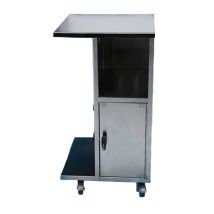
Mobile Workstation, 22" x 21" top
Request Quote -
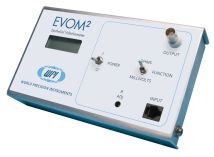
Epithelial Volt/Ohm (TEER) Meter - DISCONTINUED
Trade-In Available - Request Quote
-
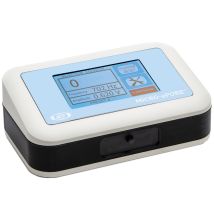
WPI MICRO-ePORE Pinpoint Cell Penetrator
Request Quote -
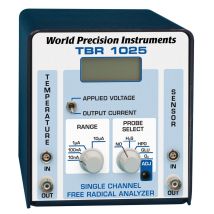
One-Channel Free Radical Analyzer
Request Quote -
Replacement REMS HTS Electrode
Request Quote - Request Quote
-
Pneumatic PicoPump: Injection and Vacuum
Request Quote