Surgical Instrument Videos
- - February 16, 2024
The WPSS01 skin stapler is an affordable, reliable solution for veterinary wound closures. A skin stapler is designed for the efficient closure of surgical incisions or wounds by applying surgical staples to the skin, reducing surgery time and time under anesthesia. Each disposable skin staple cassette contains at least thirty-five (35) 316L stainless steel staples.
Each reusable skin stapler handle is provided sterile with one disposable staple cassette already loaded into the handle. Discard the disposable staple cassette after the procedure. The reusable handle may be cleaned and resterilized (autoclave, EO) for subsequent procedures and will effectively deploy at least twenty (20) disposable staple cassettes and withstand at least twenty (20) autoclave cycles.
- - April 19, 2022
Needle holders, also known as a needle drivers. They are used in wound closure, ligation, reanastomosis and other surgical procedures which require suturing. The needle is usually held in position by a clamp mechanism, which allows the operator to manipulate the needle through various tissues. The jaws are generally textured and short in comparison to the shank to retain a solid grasp on the needle.
- - March 14, 2022
In this video, you get some practical tips on sterilizing your surgical instruments and using an autoclave. This video is the fourth in a series of four to discuss some best practices in caring for your surgical instrument investment.
Autoclaving, which is saturated steam under high pressure, is the most common method for sterilizing surgical instruments, but a cold sterilization method may also be used.
Prior to sterilization, clean the instruments and lubricate all hinged instruments with a surgical instrument lubricant. *Do not use WD-40, oil or other industrial lubricants.*
Cold Sterilization
Cold sterilization involves soaking instruments in a cold sterilant like Cidex® for at least 10 hours. This process may be detrimental to fine instruments.
If disinfection is all that is required (and not sterilization) a 10–90 minute soak in Cidex® may be all that is necessary.
When using instruments with tungsten carbide inserts, avoid using solutions with benzyl ammonium chloride
...more
- - March 09, 2022
In this video, you can see how to mechanically clean surgical instruments using an ultrasonic cleaner. This video is loaded with tips. This video is the third in a series of four to discuss some best practices in caring for your surgical instrument investment.
Ultrasonic is the most effective cleaning method, because of its cavitation. Vibrating sound waves create micron-size bubbles in solution that grow as the pressure in the unit changes. Eventually the bubbles implode. The bursting bubbles effectively dislodge debris, even in the most difficult to reach places. Use of ultrasonic detergent greatly improves the effectiveness of the cleaner, because it increases the number of tiny bubbles.
Rinsing Instruments
Immediately after use, rinse instruments under warm or cool running water to remove all blood, body fluids and tissue. Dried soils may damage the instrument surface and make cleaning difficult. Do not use hot water since this causes proteinous substances to coagulate.
Process...more
- - March 07, 2022
In this video, you can see how to manually clean surgical instruments. It is loaded with tips. This video is the second in a series of four to discuss some best practices in caring for your surgical instrument investment.
If instruments are easily damaged, complex and requiring disassembly, or have small lumens, they may need to be cleaned manually.
Personal Protective Equipment
When cleaning your instruments manually, wear heavy-duty rubber gloves, a plastic apron, eye protection and a mask.
Cleaning Materials
Remember, use stiff plastic cleaning brushes. Do not use steel wool or wire brushes.
Use only neutral pH detergents. If the instruments are not rinsed properly, low pH detergents may breakdown the stainless protective surface and cause black staining.
High pH detergents may cause surface deposits of brown stains, which can interfere with the smooth operation of the instrument.
Process
- Brush delicate instruments carefully and handle them separately from general instruments...more
- - March 03, 2022
What's the difference between cleaning, disinfecting and sterilizing? Let's take a look. This is the first in a series of four videos to discuss some best practices in caring for your surgical instrument investment.
Surgical instruments are crucial in your research, and proper cleaning, handling and storage will ensure your instruments last for many years to come.
First of all, before we begin, let me remind you not to use alcohol for cleaning. It is not a good cleaning agent, and because of its rapid evaporation, it cannot sterilize instruments. Now, in this series of videos, we will talk about the three levels of surgical instrument care -- cleaning, disinfecting and sterilizing.
Cleaning
Cleaning removes dirt, debris and biological material from surgical instruments. To maximize the useable life of your instruments, never allow blood to dry on surgical instruments. Within 10-20 minutes after a procedure, open all the instruments and begin a decontamination process.
To prevent blood...more - - February 09, 2022
Surgical instruments are designed to perform diagnostic, therapeutic, or investigative operations having specific functions such as to cut or incise, retract, grasp, hold or occlude, dilate or probe, suture or ligate.
The majority of surgical instruments are made of stainless steel or titanium (used where non-magnetic instruments are required). Stainless steel is an alloy that contains a minimum 12% chromium for corrosion resistance. Here's a quick comparison chart looking a various metals used in surgical instruments and the best applications for each.
Stainless Steel
Austenitic 316 steel, also called surgical steel or marine grade steel is the most common alloy used for WPI's standard line of instruments. Surgical steel has excellent corrosion-resistance, which makes it a good choice for biomedical implants or body piercing jewelery, as well as surgical instruments. It is in compliance with ASTM F138. Stainless steel (Inox) also has good salt resistance and temperature resistant up...more
- - September 26, 2021
Inox, Titanium, Dumoxel®, Dumastar®, Antimagnetic... Have you ever looked at the variety of metal alloys for surgical instruments and laboratory tools and wondered which is best for your needs? Here's a brief rundown.
Hardness (Rockwell) Max. Temp. Resistance Max. Temp. Resistance Magnetic Stainless Steel & Inox 55-56 350°C Good Yes Dumoxel 36 350°C Excellent No Dumostar 62 550°C 100% Non-corrosive No Titanium 37 550°C 100% Non-corrosive No Stainless Steel (Inox)
Why Stainless Steel is the Standard Alloy for Surgical Instruments
Our standard line of instruments is manufactured of highest quality materials. They are made of austenitic 316 steel commonly known as “surgical steel” or “marine grade steel.” Stainless steel, also known as Inox (from the French word "inoxydable"), is highly corrosion resistant and it is a common choice of material for biomedical implants or body piercing jewelry. It is in compliance with ASTM F138. This WPI line is an excellent alternative to German surgical...more
- - June 28, 2021
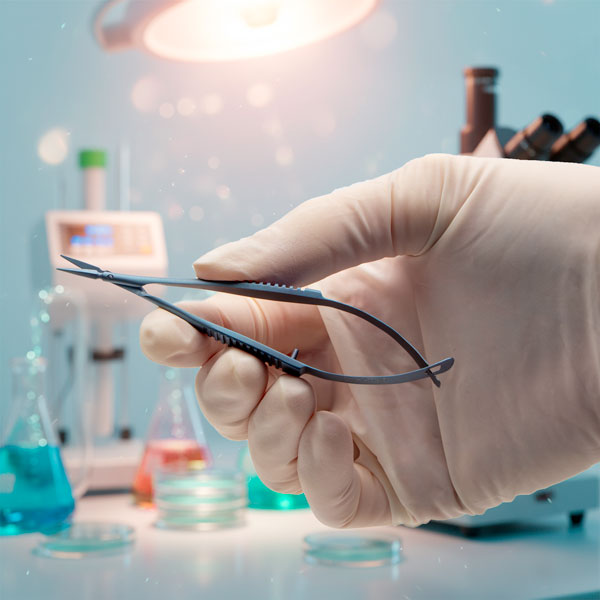
Scissors are cutting instrument with two blades joined together at a pivot point so that the sharp edges glide against each other to shear material that is between the blades. Micro scissors are often called Vannas or spring scissors. Fine tip scissors (like these Vannas) are ideal for use in very restricted spaces. Here we examine some of our popular Vannas scissors.
Ambidextrous Use
Vannas scissors are perfect for right- or left-hand use, and are designed for ophthalmological procedures and neurosurgical application, which require a delicate incision of tissue.
Less Tissue Trauma
You can make quick, accurate cuts with minimal tissue damage, because these fine scissor blades are sharp. Vannas scissors work well under a dissection microscope.
Curved or Straight Tips
Curve-tipped scissors are a good choice when you want to avoid cutting underlying tissues. Curved blades provide a better visual of the working area. Straight blades may be used for any type of incision.
The blade tips...more
- - March 04, 2021
WPI’s disposable scalpels come in many styles and are ideal for students, researchers, and crafters. Here we will describe some of the uses for these popular blades.
Scalpel blades come in a variety of shapes so that you can choose the ones best suited to your application.
The #10 blade is a commonly used blade for surgical applications. It is used for making large incisions through skin and subcutaneous tissues. It is similar to the #20 blade, which is somewhat larger. The #20 blade is used for larger incisions through thicker tissues or for dissection of the soft tissues in larger animals.
Blades #10, 15, 20, 21, 22, 23 and 24 are all curved and said to have a "belly." They are all used for making incisions. The sharpest area on these blades is the apex of curve at the belly. This is the spot on the blade which is used for making the incision. Since the #15 is the smallest of these belly blades, it is often used for small animal surgery where short, precise incisions are...more
- - October 16, 2014
What's the difference between cleaning, disinfecting and sterilizing? Let's take a look. This is the first in a series of four videos to discuss some best practices in caring for your surgical instrument investment.
In video #2, you can see how to manually clean surgical instruments. It is loaded with tips. This video is the second in a series of four to discuss some best practices in caring for your surgical instrument investment.
In video #3, you can see how to mechanically clean surgical instruments using an ultrasonic cleaner. This video is loaded with tips. This video is the third in a series of four to discuss some best practices in caring for your surgical instrument investment.
In video #4, you get some practical tips on sterilizing your surgical instruments and using an autoclave.This video is the fourth in a series of four to discuss some best practices in caring for your surgical instrument investment.
WPI was founded by a researcher who built electrophysiology equipment...more
- - October 02, 2013
WPI surgical instruments were recently featured in a JoVE video that demonstrates a new method for cross pollinating grasses.
Jiang, H., Barbier, H., Brutnell, T. Methods for Performing Crosses in Setaria viridis, a New Model System for the Grasses. J. Vis. Exp. (80), e50527, doi:10.3791/50527 (2013).
Recent Posts