Application Notes
- - June 30, 2023
In any laboratory, having key lab supplies is almost as important as having the major equipment. Choosing a reputable supplier of these necessary supplies is as important as having quality laboratory supplies when you need them. WPI wants to be your partner in early drug discovery, and we stock a wide variety of lab supplies, many of which can ship the same business day. Having a variety of lab supplies ready to ship makes us a dependable research partner. Here are some of the popular supplies that we keep on hand to meet your needs for your upcoming experiment
- - May 01, 2023
Improved User Experience
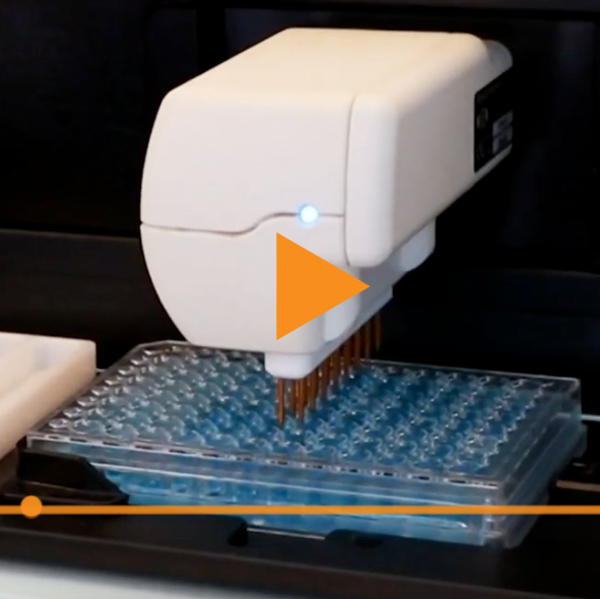
EVOM™ Auto is the latest generation of WPI’s automated transepithelial or transendothelial electrical resistance (TEER) measurement system. Using the same proven technology in the EVOM™ Manual and REMS, combined with a new multi-electrode array, software interface and control system, it delivers our fastest workflow solution while improving TEER measurement accuracy: - Faster throughput – read a 96-well plate in under 3.5 minutes (A 2-rinse cycle can be completed in 7 minutes, almost halving the time compared to a REMS)
- Automatic sample averaging improves accuracy and stability
- Compact size for easy set up and operation inside in a hood or incubator
- Wireless control of the autosampler
- Smart user interface and web browser-based software for easy sample analysis and data storage and access
- Wider resistance range compared to the REMS – upper range increased from 20 kΩ to 100 kΩ
- Continuous data recording capability at user-defined time intervals
EVOM™ Auto, with advanced...more
- - April 04, 2023
In vitro models have employed two common methods to quantify changes in endothelial barrier integrity: transepithelial/transendothelial electrical resistance (TEER) and tracer compound permeability.1 TEER is a non-invasive method that quantifies changes in electrical conductance to measure confluency and barrier integrity. Tracer compound permeability uses molecules of defined molecular weights to measure the size exclusion capacity of cell barriers (e.g., 4 kDa FITC-dextran or FD4).1 Using the EVOM™ Manual (EVOM-MT-03-01) with the EndOhm TEER electrode and cell culture permeable supports, this application note describes how to non-invasively evaluate endothelial barrier integrity after cytokine treatment and provides a method to identify vasoactive compounds that have the potential to induce vascular injury. Tracer compound permeability studies are combined with TEER evaluation to elucidate treatment-induced impacts on both intercellular junctions and paracellular transport (Fig...more
- - March 03, 2023
In the process of ‘cell cycle’, cells grow and divide into two genetically identical daughter cells. It is regulated by a complex signaling pathway which keeps cell homeostasis by regulating cell division and DNA duplication1. On the other hand, because cancer cells grow and divide indefinitely out of cell cycle control, anti-mitotic drugs are used to suppress abnormal proliferation of cancer cells2. In particular, Nocodazole is known to be a representative anti-mitotic drug for cancer treatment, and it has the characteristics of disturbing microtubule dynamics during cytoplasmic and nuclear division3,4.
- - March 01, 2023
Cytotoxicity refers to the degree of damage to cells. caused by chemical substances or physical factors. Measuring it through cytotoxicity assay is essential for drug development and biological research. Cells undergo complex signaling pathways that causes various cell death processes such as apoptosis, necrosis, and necroptosis. However, most cytotoxicity assays are measured at the endpoint that makes it difficult to study the dynamic response of cells to drugs.
In this application note, we aimed to examine the performance of a cytotoxicity assay using real-time imaging. Cells treated with various concentrations of Nocodazole, the anti-cancer drug, were stained with fluorescent dye during cell death, then monitored with Celloger® Mini Plus. It was observed through time-lapse imaging that apoptosis increased in a Nocodazole dose-dependent manner, and the degree of apoptosis was quantitatively measured and graphed using the Analysis software provided with the Celloger® Mini Plus.
- - February 24, 2023
As white blood cells responsible for immune function are suspension cells that travel along blood vessels, immunology studies often use various suspension cell lines originating from white blood cells. Dealing with suspension cells, unlike adherent cells, slight movement of a plate when locating it on the microscope causes the cells to float. Aside from the problems caused by temperature and CO2 instability, it is in fact not possible to use a traditional microscope to monitor cells in real time. Therefore, in order to stably monitor suspension cells, a live cell imaging device such as Celloger® Mini Plus that operates inside an incubator is essential1. In addition, with Celloger® Mini Plus, the camera inside the system moves to capture the images of cells in multiple positions to keep the cell sample in a steady state instead of having a movable stage with a plate on it. When the suspension cells were monitored both by Celloger® Mini Plus and microscope, imaging with Celloger® Mini Plus...more
- - August 20, 2019
Are you looking for a microliter or sub-microliter and high precision syringe that holds needles as small as 36 gauge (G), in addition to having the capability to connect to quartz tubing?
WPI’s NanoFil is the answer. We offer NanoFil syringes with NanoFil needles or the option to connect the NanoFil syringe to quartz tubing to use in research studies, mainly involving sub-microliter volume injections into animal tissues.
- - December 07, 2014
A calibrated BLPR2 on the LabTrax24T was used to record the results. This is a plot of both pumps on the #14 tubing at 50 RPM into a 22 gauge needle. The flow is estimated to be 9 ml/min at 50RPM.
- - October 20, 2014
A low-noise amplifier like the DAM50 is an excellent choice for EEG recording in rodents. WPI's amplifiers were engineered for the bio-medical researcher. While 20-30μV of noise is common in bio-amplifiers, WPI’s DAM series amplifiers generate 0.4μV RMS (root mean squared) at 0.1-100Hz. (That’s equal to about 2μV peak to peak.) This setup shows one way such recordings could be made. The RC1 electrode works well for rats, and the EP1 is more suitable for mouse cranial application.
For this application, you will need the following equipment:
- (1) DAM50 amplifier
- (1) MD4R micromanipulator
- (2) M3301EH electrode holders
- (2) Profile A single tungsten metal electrodes
- (1) M10 stand
- (1) 5052 steel base plate
- (1) 5470 cable
- (1) electrode (RC1 or EP1)
Rat Cranial Applications
- - July 07, 2014
Watch how researchers from the University of Chicago inject adult zebrafish using a 10μl NanoFil microsyringe controlled by a Micro4 controller and UltraMicroPump III (UMP3-1 includes one UMP3 pump and a Micro4 controller).
References
Warmerdam, T., Schröder, F., Wit, H., & Albers, F. (n.d.). Perilymphatic and endolymphatic pressures during endolymphatic hydrops. European Archives of Oto-Rhino-Laryngology, 260(1), 9–11. http://doi.org/10.1007/s00405-002-0518-2
Wei, J., Song, J., Jiang, S., Zhang, G., Wheeler, D., Zhang, J., … Liu, R. (2017). Role of intratubular pressure during the ischemic phase in acute kidney injury. American Journal of Physiology - Renal Physiology, 312(6), F1158–F1165. http://doi.org/10.1152/ajprenal.00527.2016
Petrie, R. J., Koo, H., & Yamada, K. M. (2014). Generation of compartmentalized pressure by a nuclear piston governs cell motility in a 3D matrix. Science, 345(6200), 1062–1065. http://doi.org/10.1126/science.1256965
Petrie,...more - - June 30, 2014
In this JoVE video you can observe as the researchers perform an intraluminal middle cerebral artery occlusion (MCAO) on a mouse. The MCAO model is the most frequent used model among experimental ischemic stroke models.
WPI instruments used in this application include:
SuperCut Iris scissor, straight 14218 Vannas micro-scissor, straight 14003 Dumont fine tip forceps 503290 Vessel clip 14120 High Frequency Desiccator 900 504043 Silicone RTV adhesive 1571 Thermal Cautery Unit 501292 BAT-12 BAT-12R Ansari, S., Azari, H., McConnell, D. J., Afzal, A., Mocco, J. Intraluminal Middle Cerebral Artery Occlusion (MCAO) Model for Ischemic Stroke with Laser Doppler Flowmetry Guidance in Mice. J. Vis. Exp. (51), e2879, doi:10.3791/2879 (2011).
- - June 24, 2014
Chiara Cianciolo Cosentino, at the University of Pittsburgh, describes how she uses intravenous microinjections of zebrafish larvae to study acute kidney injury in this JoVE video. You can also watch this video on JoVE. WPI equipment shown in this video includes:
- - October 02, 2013
WPI surgical instruments were recently featured in a JoVE video that demonstrates a new method for cross pollinating grasses.
Jiang, H., Barbier, H., Brutnell, T. Methods for Performing Crosses in Setaria viridis, a New Model System for the Grasses. J. Vis. Exp. (80), e50527, doi:10.3791/50527 (2013).
- - August 22, 2013
Researchers at the University of Michigan are using WPI's PV820 for injecting a morpholino solution into the lumen of the otic vesicle of 1-day old zebrafish embryos. Then, they use electroporation to introduce mif and mif-like morpholinos into the developing inner ear tissues.
Check out the JOVE video to see:
- How to make electrodes for electroporation
- How to setup the electroporation
- How to inject the morpholinos
- Examine some of the results
References
JOVE video: Holmes, K. E., Wyatt, M. J., Shen, Y., Thompson, D. A., Barald, K. F. "Direct Delivery of MIF Morpholinos Into the Zebrafish Otocyst by Injection and Electroporation Affects Inner Ear Development". J. Vis. Exp. (47), e2466, doi:10.3791/2466 (2011).
Warmerdam, T., Schröder, F., Wit, H., & Albers, F. (n.d.). Perilymphatic and endolymphatic pressures during endolymphatic hydrops. European Archives of Oto-Rhino-Laryngology, 260(1), 9–11. http://doi.org/10.1007/s00405-002-0518-2
Wei,...more
- - May 21, 2013

Recent Posts