TEER
- - September 05, 2025
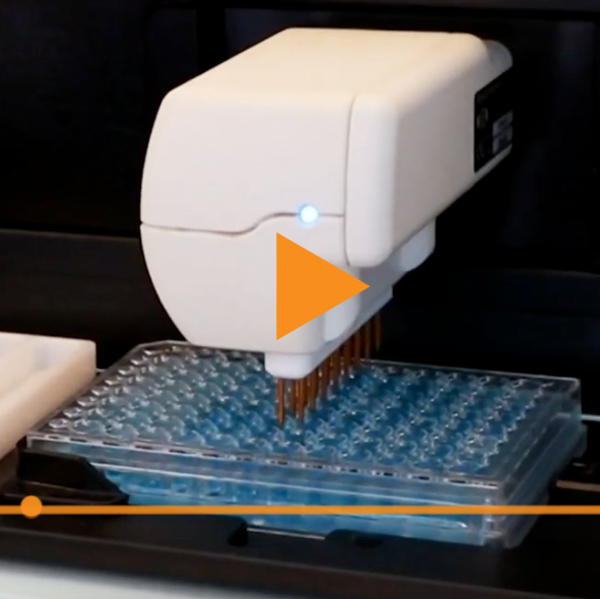
Meet the EVOM™ Auto from World Precision Instruments, the breakthrough that’s revolutionizing drug discovery. When it comes to drug discovery, reliable data on barrier function and cell integrity is essential. Transepithelial Electrical Resistance (TEER) measurements have long been the gold standard for assessing barrier function and cell integrity, critical data for your research, but traditional TEER workflows are often slow, error‑prone, and labor‑intensive.
- - August 21, 2025
Cell barriers, such as the intestinal epithelium, blood–brain barrier, or corneal endothelium, are critical for controlling what enters and exits tissues. A compromised barrier can lead to disease, while a strong barrier is essential for maintaining health.
Understanding how our body's protective barriers function is crucial for advancing treatments and developing new therapies. For researchers, accurately measuring barrier integrity is vital in fields ranging from drug development to disease modeling. One of the most important tools scientists use to study these barriers is TEER (Transepithelial Electrical Resistance or Transendothelial Electrical Resistance). This powerful measurement technique provides valuable insights into the integrity and function of cellular barriers that protect our organs and tissues. TEER is a gold-standard, non-invasive technique for quantifying the integrity and permeability of cell monolayers grown in culture.
- - June 11, 2025
World Precision Instruments (WPI), the global leader in transepithelial electrical resistance (TEER) technology, in collaboration with SynVivo, a leader in organ-on-chip (OOC) solutions, is proud to announce the launch of the EVOMTM Chip – a revolutionary multiplex TEER system designed specifically for real-time, non-destructive monitoring of OOC platforms.
Co-developed to support SynVivo’s state-of-the-art Blood-Brain Barrier (BBB) OOC model, the EVOM™ Chip enables on-chip, multiplex TEER measurements with embedded electrodes. This innovation allows researchers and drug developers to continuously monitor up to 12 OOCs for barrier integrity while simultaneously enabling fluidics and imaging, offering hands-free operation with enhanced accuracy, precision, and reproducibility.
- - May 16, 2025
In barrier model research, the integrity of your cell monolayers isn’t just important—it’s everything. Whether you're studying epithelial transport, drug permeability, or disease modeling, your ability to trust your data hinges on the health of your cultures. That’s why so many researchers rely on Transendothelial/Transepithelial Electrical Resistance (TEER) as a simple, non-invasive, real-time quantitative evaluation of the integrity of your cellular barrier.
- - May 08, 2025
Transepithelial/Transendothelial Electrical Resistance (TEER) is a widely used quantitative technique to assess the integrity of tight junctions in cell monolayers. WPI’s EVOM™ is the gold standard for TEER measurement and is particularly valuable in studies involving drug transport, toxicology, inflammation, and organ-on-chip systems. TEER measurement provides fast and quantitative data and can be used as an efficient and cost-effective method for drug discovery and development. There are certain biological and technical factors that are known to affect TEER readings. This article reviews the key variables that influence TEER outcomes in cell culture studies and how to ensure consistent TEER measurement analysis can be done by minimizing or eliminating the effects of these factors.
- - April 29, 2025
In traditional hanging-insert workflows, media changes are a slow, manual bottleneck. Researchers must lift each insert—often with tweezers—to access the narrow gap between insert and well for pipetting or aspiration. This labor-intensive step not only adds time and variability but also risks disturbing delicate cellular layers. Now, WPI’s 24-Well Auto Exchange Cell Culture Plate fundamentally reshapes this workflow by combining smart well geometry, integrated fluidics, and robust insert seating to enable fully automated, multichannel TEER measurement on the EVOM™ Auto—and to simplify every step of media exchange and sampling, whether done by hand or robot. It enables seamless media exchange and multichannel TEER measurements without ever lifting an insert.
- - March 07, 2025
Organoids are three-dimensional, miniature models of organs and tissues that are grown in vitro from stem cells or other progenitor cells with the ability to differentiate into a cell type found in a given organ or tissue. They closely mimic the structure and function of human organs, making them valuable tools for studying human development, disease modeling, drug discovery, and personalized medicine.
- - February 13, 2025
The EVOM™ Auto with GxP module allows you to synchronize the date and time of the EVOM™ Auto system to the computer. This date is used to time stamp data when acquiring data and when staging it for export.
- - February 09, 2025
EVOM™ GxP compliance Module is 21 CFR Part 11 compliant software that meets the FDA's requirements for electronic records and signatures. When running the EVOM™ Auto with the GxP.
- - February 01, 2025
WPI's EndOhm chambers are used with WPI's EVOM2 meter to measure TEER (transepithelial electrical resistance) in cell culture inserts. Three chamber sizes are available for 6-well plates, 12-well plates and 24-well plates. Here Subhra demonstrates how to choose an EndOhm chamber to match the cell culture inserts you are using.
- - January 20, 2025
EVOM™ Auto is a high throughput screening (HTS) platform offering fast, non-invasive sample scanning by comparing electrical resistance measurements (transepithelial/transendothelial electrical resistance: TEER). TEER measurement experiments are simple to set up and less time consuming than more complex molecular studies. The GxP module offers 21 CFR Part 11 compliant software that is required by the FDA. In this video, we will see how to delete an EVOM™ Auto GxP measurement sequence you no longer need.
- - January 17, 2025
One of our frequently asked questions (FAQs) concerns TEER measurements with an EndOhm. If the resistance readings from your ENDOHM don't stabilize, you may need to do some troubleshooting.
- - January 15, 2025
EndOhm chambers are designed for making accurate TEER measurement of epithelial and endothelial cell cultures. The design keeps the top and bottom electrodes at a fixed gap and maintains the sample (cell culture insert) in a centered position inside. This design minimizes the variability associated with electrode positioning and gap, making EndOhm chambers more accurate and capable of generating reproducible results. WPI made some recent upgrades to the EndOhm chambers.
- - January 14, 2025
WPI’s EVOM™ line of transepithelial electrical resistance (TEER) measurement systems use silver-silver chloride electrodes for taking measurements. Our newest automated TEER measurement unit, the EVOM™ Auto, is available with an optional GxP module to ensure 21 CFR Part 11 compliance. GxP represents the quality guidelines in place to ensure standards are met. It is used for protocols like Good Laboratory Practice, Good Pharmaceutical Practice, Good Clinical Practice, Good Manufacturing Practice, and Good Research Practice.
Regular maintenance keeps your EVOM™ Auto GxP electrodes performing optimally. Periodically, you will need to re-chloride your electrodes. Just follow the steps shown in this video.
- - January 14, 2025
EVOM™ Auto with GxP powered by TotalLab automates your TEER measurements with the confidence that your data security complies with FDA’s 21 CFR Part 11 regulations.
You may calibrate the electrode array head using the internal reference resistor. Nothing involving the motor movement happens.

Recent Posts