Page 4 - Surgical Instruments
- - March 03, 2022
What's the difference between cleaning, disinfecting and sterilizing? Let's take a look. This is the first in a series of four videos to discuss some best practices in caring for your surgical instrument investment.
Surgical instruments are crucial in your research, and proper cleaning, handling and storage will ensure your instruments last for many years to come.
First of all, before we begin, let me remind you not to use alcohol for cleaning. It is not a good cleaning agent, and because of its rapid evaporation, it cannot sterilize instruments. Now, in this series of videos, we will talk about the three levels of surgical instrument care -- cleaning, disinfecting and sterilizing.
Cleaning
Cleaning removes dirt, debris and biological material from surgical instruments. To maximize the useable life of your instruments, never allow blood to dry on surgical instruments. Within 10-20 minutes after a procedure, open all the instruments and begin a decontamination process.
To prevent blood...more - - February 14, 2022
Ultrasonic cleaning is the most effective cleaning method for maintaining your surgical instruments, because of its cavitation. Vibrating sound waves create micron-size bubbles in solution that grow as the pressure in the unit changes. Eventually the bubbles implode. The bursting bubbles effectively dislodge debris, even in the most difficult to reach places. Use of ultrasonic detergent greatly improves the effectiveness of the cleaner, because it increases the number of tiny bubbles
- Immediately after use, rinse instruments under warm or cool running water to remove all blood, body fluids and tissue. Dried soils may damage the instrument surface and make cleaning difficult.
CAUTION: Do not use hot water since this causes proteinous substances to coagulate. - Before you begin, fill the ultrasonic cleaner with deionized water and enzymatic cleaner like Enzol according to the manufacturer’s recommendations. You may also use a neutral pH or mild alkaline detergent like Alconox.
- Run the cleaner...more
- Immediately after use, rinse instruments under warm or cool running water to remove all blood, body fluids and tissue. Dried soils may damage the instrument surface and make cleaning difficult.
- - February 14, 2022
After a good cleaning and disinfection, your surgical instruments may be sterilized using a variety of methods. The chart below shows two common methods, autoclaving and cold sterilization. Sterilization destroys all microbial life. Some chemical sterilants can be used as high level disinfectants (HLD) when used for shorter exposure periods.
- You can sterilize your instruments by soaking them in a chemical sterilant like Cidex Plus® for 10 hours at 25°C. This process may be detrimental to fine instruments.
- Dry heat or autoclaving are the preferred methods of sterilizing surgical instruments. Typically, surgical instruments are sterilized by autoclaving. Autoclaving, which is saturated steam under high pressure, is the most common method for sterilizing surgical instruments. If you prefer to autoclave, instruments may be autoclaved individually or in sets.
Disposable paper or plastic pouches are ideal for autoclaving individual instruments. Use a pouch wide enough for instruments with...more
- - February 13, 2022
The proper care and handling of surgical instruments is the simplest way to protect your investment and add years to the life of your instruments. Here is a handy infographics showing the steps for proper surgical instrument cleaning.
When you are cleaning instruments manually, here a few quick tips:
- Use stiff plastic cleaning brushes.
- Do NOT use steel wool or wire brushes.
- Use only neutral pH detergents.
Take special care when you are rinsing your instruments. Here's a note of caution:
- If not rinsed properly, low pH detergents may breakdown the stainless protective surface and cause black staining.
- High pH detergents may cause surface deposits of brown stains, which can interfere with the smooth operation of the instrument.
This are the steps of a typical protocol.
- Whether you are cleaning your surgical instruments manually or ultrasonically, the first step is to rinse off all blood, bodily fluids and tissue immediately after use. Dried soils may damage the instrument surface and...more
- - February 13, 2022
Although stainless steel is corrosion-resistant, it can still rust and stain if it is handled improperly. To determine if a discoloration is rust or just a stain, erase the discoloration with a pencil eraser. If there is pitting in the metal under the discoloration, it is corrosion. If the discoloration is removed, it was just a stain.
- A High pH can cause a brown or orange stain on surgical instruments.
- If a stain is dark brown, the stainless steel surgical instruments have likely been exposed to a Low pH solution.
- A blue or bluish-black stain could be the result of reverse plating. This can happen if you mix metals in a cleaning cycle. For example, stainless steel instruments should not be mixed with titanium instruments. Do not place dissimilar metals (stainless steel, copper, chrome-plated, titanium, etc.) in the same cleaning cycle.
- A stain of multi-colors is caused by excessive heat.
- Light or dark spots on instruments are often caused by water droplets that dry on the surface of...more
- - February 09, 2022
Surgical instruments are designed to perform diagnostic, therapeutic, or investigative operations having specific functions such as to cut or incise, retract, grasp, hold or occlude, dilate or probe, suture or ligate.
The majority of surgical instruments are made of stainless steel or titanium (used where non-magnetic instruments are required). Stainless steel is an alloy that contains a minimum 12% chromium for corrosion resistance. Here's a quick comparison chart looking a various metals used in surgical instruments and the best applications for each.
Stainless Steel
Austenitic 316 steel, also called surgical steel or marine grade steel is the most common alloy used for WPI's standard line of instruments. Surgical steel has excellent corrosion-resistance, which makes it a good choice for biomedical implants or body piercing jewelery, as well as surgical instruments. It is in compliance with ASTM F138. Stainless steel (Inox) also has good salt resistance and temperature resistant up...more
- - September 26, 2021
Inox, Titanium, Dumoxel®, Dumastar®, Antimagnetic... Have you ever looked at the variety of metal alloys for surgical instruments and laboratory tools and wondered which is best for your needs? Here's a brief rundown.
Hardness (Rockwell) Max. Temp. Resistance Max. Temp. Resistance Magnetic Stainless Steel & Inox 55-56 350°C Good Yes Dumoxel 36 350°C Excellent No Dumostar 62 550°C 100% Non-corrosive No Titanium 37 550°C 100% Non-corrosive No Stainless Steel (Inox)
Why Stainless Steel is the Standard Alloy for Surgical Instruments
Our standard line of instruments is manufactured of highest quality materials. They are made of austenitic 316 steel commonly known as “surgical steel” or “marine grade steel.” Stainless steel, also known as Inox (from the French word "inoxydable"), is highly corrosion resistant and it is a common choice of material for biomedical implants or body piercing jewelry. It is in compliance with ASTM F138. This WPI line is an excellent alternative to German surgical...more
- - June 28, 2021
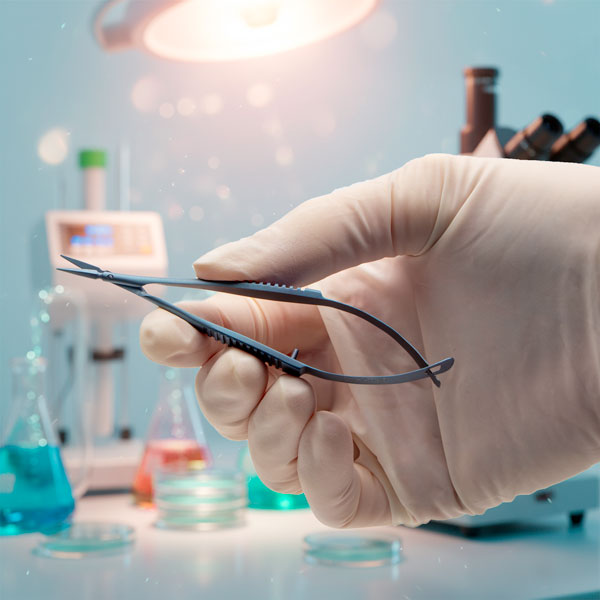
Scissors are cutting instrument with two blades joined together at a pivot point so that the sharp edges glide against each other to shear material that is between the blades. Micro scissors are often called Vannas or spring scissors. Fine tip scissors (like these Vannas) are ideal for use in very restricted spaces. Here we examine some of our popular Vannas scissors.
Ambidextrous Use
Vannas scissors are perfect for right- or left-hand use, and are designed for ophthalmological procedures and neurosurgical application, which require a delicate incision of tissue.
Less Tissue Trauma
You can make quick, accurate cuts with minimal tissue damage, because these fine scissor blades are sharp. Vannas scissors work well under a dissection microscope.
Curved or Straight Tips
Curve-tipped scissors are a good choice when you want to avoid cutting underlying tissues. Curved blades provide a better visual of the working area. Straight blades may be used for any type of incision.
The blade tips...more
- - June 20, 2021
WPI offers alkaline cleaners for the pharmaceutical, biotech, medical device, healthcare, precision engineering, and other sectors.
- - May 10, 2021
Stainless steel and polymers are two of the most popular material options for sterilization trays used in the pharmaceutical and medical industries. In terms of toughness, long shelf life and resistance to contaminant absorption, surgical stainless steel outperforms plastic trays, especially for medical usage. Stainless steel trays also have a lower total cost over time.
- - May 09, 2021
by Carmen Raymond
Stainless steel sterilization baskets require a proper finish to increase the basket's versatility. The correct finish of stainless steel enhances it chemical resistance, handling characteristics and other key operational features. Let's take a look at the two most common finishes for stainless steel.
Passivation
Passivation is a corrosion-prevention treatment of stainless steel. This chemical process involves removing free iron from the metal's surface with citric acid or nitric acid. The process of passivation creates a thick protective oxide coating on the stainless steel, which makes it resistant to corrosive chemicals.
The process of passivation cleans the stainless steel surface, removing all grease, oils and dirt. This results in a uniform, smooth appearance and finish.
A smooth passivation finish minimizes the chance of rust damage of your sterilization basket, surgical instrument or stainless steel product. It also eliminates extra maintenance steps to protect...more
- - March 04, 2021
WPI’s disposable scalpels come in many styles and are ideal for students, researchers, and crafters. Here we will describe some of the uses for these popular blades.
Scalpel blades come in a variety of shapes so that you can choose the ones best suited to your application.
The #10 blade is a commonly used blade for surgical applications. It is used for making large incisions through skin and subcutaneous tissues. It is similar to the #20 blade, which is somewhat larger. The #20 blade is used for larger incisions through thicker tissues or for dissection of the soft tissues in larger animals.
Blades #10, 15, 20, 21, 22, 23 and 24 are all curved and said to have a "belly." They are all used for making incisions. The sharpest area on these blades is the apex of curve at the belly. This is the spot on the blade which is used for making the incision. Since the #15 is the smallest of these belly blades, it is often used for small animal surgery where short, precise incisions are...more
- - September 05, 2019
Benefits of Black Coated Surgical Instruments
Black coated surgical instruments are not only visually more attractive than the stainless-steel ones, there are several other benefits as provided below:
- Non-reflective surface reduces eye-fatigue
- Has prolonged life
- Up to 10 times harder than stainless steel
- 60% lower wear rate than stainless steel
- Corrosion resistant due to oxidized aluminum coating
- Anti-allergic due to the absence of Chromium and Nickel coating
- Easy to clean
Making of Black Coating Instruments
The black coatings are created by applying a layer of Titanium Aluminum Nitrate (TiAIN) to the instrument, using an environmentally friendly Physical Vapor Deposition (PVD) process.
In this process Titanium and Aluminum are magnetron-sputtered onto the substrate in a vacuum chamber. The metal particles of the target are transformed into vapor phase, they interact with Nitrogen ions and get deposited onto the instrument as a few microns (µm) thin, high-density layer.
Oxidized...more
- - August 08, 2019
Whether you are working with your surgical instruments under bright lights or using a microscope, non-reflective black surgical instruments offer a distinct advantage. The titanium coating not only hardens and protects the cutting edge, but it also minimizes reflection from the surface of your instruments while you are working. They are corrosion resistant and biocompatible.

Recent Posts