Page 6 - Product Information
- - November 02, 2023
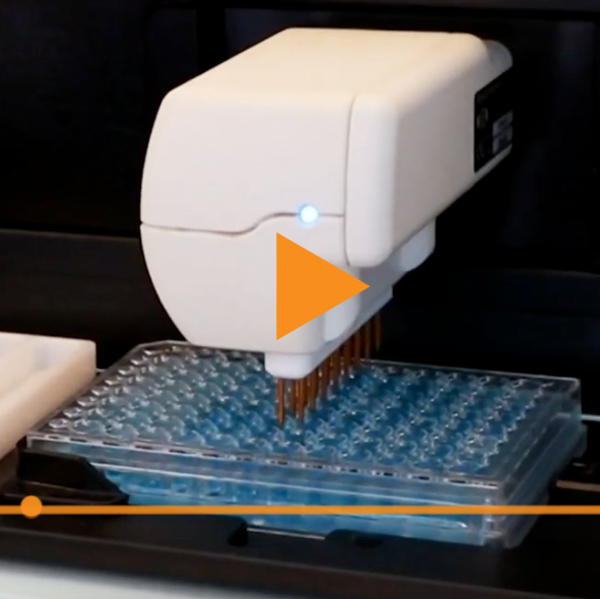
EVOM™ Auto is WPI’s latest high throughput screening TEER measurement system with 24 and 96 HTS transwell plate measurement capability, and it offers easy options for switching between different plates. I will show you how to setup it up. The Interface Unit is the controller that establishes communication between the EVOM™ Auto software and the autosampler.
- - October 31, 2023
EVOM™ Auto High Throughput (HTS) Transepithiel Electrical Resistance (TEER) Measurement System with 24 and 96 transwell capability can switch between different 24 and 96 HTS transwell plates by using matching electrode arrays and plate positioner. Here we demonstrate how to install a well plate.
- - October 26, 2023
The EVOM™ Auto High Throughput (HTS) Transepithiel Electrical Resistance (TEER) Measurement System with 24 and 96 transwell capability has a removable electrode array head. Different electrode arrays can be used with the same system to analyze a variety of 24 and 96 transwell HTS plates.
- - October 24, 2023
EVOM™ Auto High Throughput (HTS) Transepithiel Electrical Resistance (TEER) Measurement System with 24 and 96 transwell capability can switch between different 24 and 96 HTS well plates by using matching electrode arrays and plate positioners. Here we demonstrate how to switch to a 24 transwell plate after using a 96 transwell plate.
- - October 20, 2023
Micromanipulators are an important tool used to execute minute, fine-tuned movements critical for various applications including microinjection into cells or tissue, microscopy, as well as for research involving biological and nano-engineering implementation. Before selecting a micromanipulator, consider the following to choose the best option for your application:
- - October 17, 2023
Hemostatic forceps, also called ring forceps or hemostats, are common surgical instruments used in medical, veterinary, and laboratory settings to control bleeding during procedures. Hemostats are used to clamp blood vessels, tissues, or other small structures, effectively minimizing blood flow during surgical procedures. Hemostats prevent excessive bleeding for the subject and offer a clear view of the surgical site for the operator. Here’s a brief introduction to the features and uses of hemostatic forceps in a laboratory setting.
- - October 13, 2023
Cleaning laboratory syringes helps prevent contamination and ensures accurate dosing. You should always adhere to the protocols of your institution and the manufacturer of your syringe. Specific cleaning requirements may vary based on the intended use of the syringe, its material composition , and the sample fluid introduced. Here is a typical protocol for cleaning a laboratory syringe.
- - October 11, 2023
Laboratory syringes are used for accurate measurement and administration of fluids in medical, laboratory, and industrial settings. Proper maintenance is crucial to ensure their functionality and accuracy. Here we will examine some common maintenance issues you may encounter with your reusable laboratory syringes.
- - October 06, 2023
The foundation of many research laboratories is the ability to do in vitro studies, which rely on the ability to culture cells in the laboratory. Cell culture technologies have advanced significantly, allowing researchers to successfully culture many types of cell lines.
- - September 22, 2023
Laboratory forceps are surgical instruments that come in a variety of types. Here’s a brief overview to help you choose a set of forceps for your application. Surgical forceps can be divided into two broad categories, thumb forceps (also called tweezers) and hemostatic forceps. Tweezers can be further divided into dressing forceps and tissue forceps.
- - September 11, 2023
The EVOM™ family of TEER measurement meters have been cited in over 16,000 peer-reviewed, scientific journal articles. The EVOM™ Manual has been designed to improve workflow efficiency, increase stability, and provide more repeatable measurements than older Trans Epithelial Electrical Resistance (TEER) meters including the Millipore MilliCell® ERS-2, Millipore MilliCell ERS and World Precision Instruments EVOM2, EVOM and EVOMX. Here’s a quick summary of benefits of the EVOM™ Manual versus the MilliCell ERS voltohmmeter.
- - September 05, 2023
The EVOM™ Manual requires an electrode for use. Choose an electrode suitable for your application. Here's a matrix to help you choose an appropriate EVOM electrode.
- - August 31, 2023
Choosing the right syringe type depends on the specific application and the requirements of your task. Syringes come in various sizes, materials, and designs, each suited for different purposes. Here are some factors to consider when selecting a syringe type.
- - August 29, 2023
Deciding which syringe pump is best for your application involves factors like the flow rate, number of channels, and precision that you require to select and appropriate system. Use a syringe pump when manual syringe handling will negatively impact the delivery of your sample, and to precisely regulate the rate of fluid dispensed from a syringe. These pumps are utilized in diverse areas, including biomedical or chemical applications, general research, healthcare, and in industrial settings. Below is a guide to assist in deciding which syringe pump is most suitable for you:
- - August 22, 2023
Surgical forceps have been used in various forms from ancient times and have evolved into a indispensable instrument for modern surgeries. Forceps are surgical instruments for the practice of medicine which are used for grasping, holding, and manipulating tissues and objects during surgical procedures.

Recent Posts