

Z-Dimensions Are Not Created Equal
- April 30, 2013
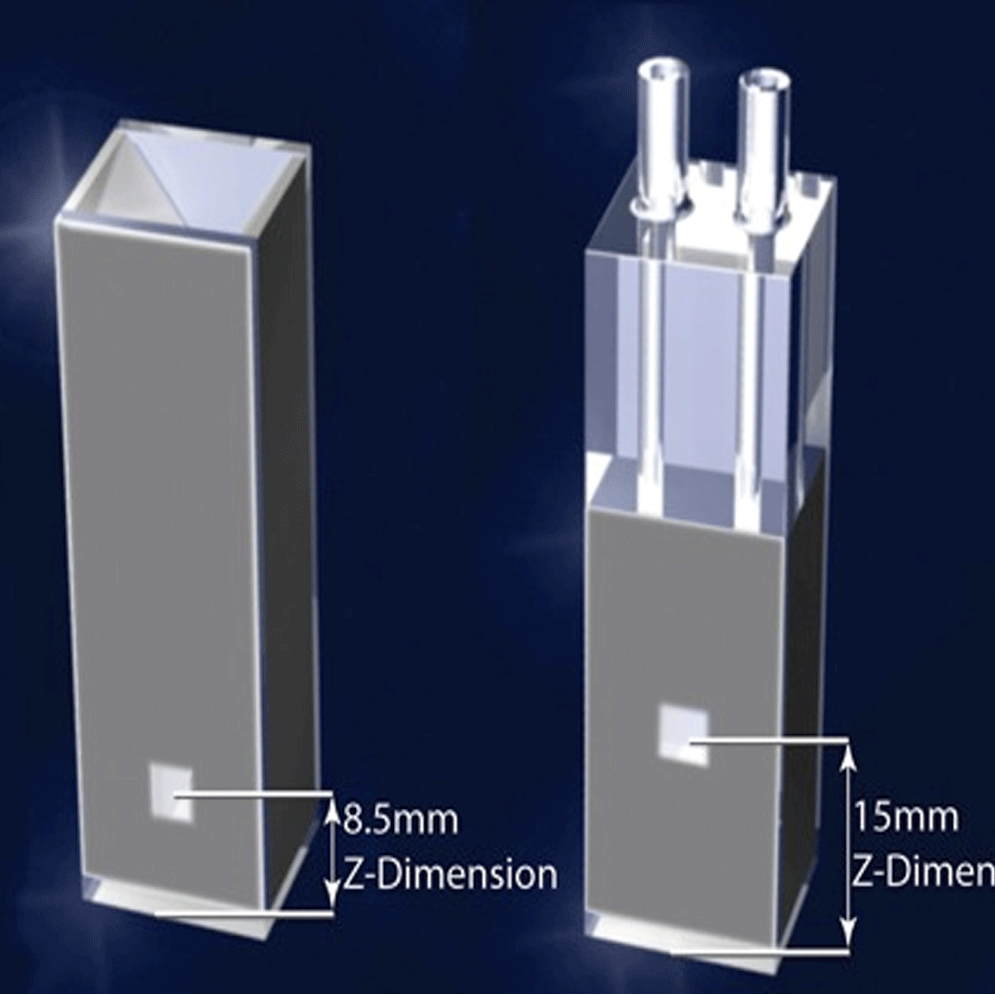
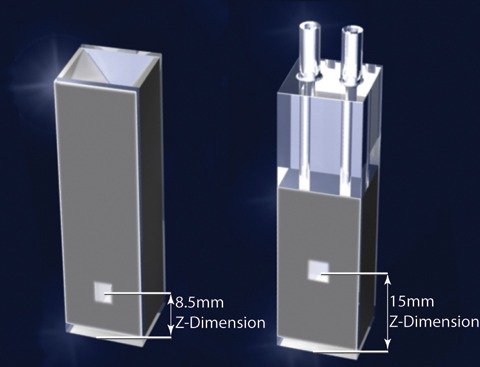 Cuvettes come in a variety of shapes and sizes, but one of the most important specifications of a cuvette is its Z-dimension. The Z-dimension of an instrument (cuvette holder or spectrometer) is the distance from the bottom of the cuvette chamber floor to the center of its light beam (see image). A cuvette’s Z-dimension must match the Z-dimension of the instrument with which it will be used.
Each manufacturer designs its instruments with a specific Z-dimension. Common Z-dimensions include 8.5 and 15mm, and sometimes 20mm. When purchasing small volume cuvettes, the correct Z-dimension becomes critical. Matching the Z-dimension of the cuvette to the Z-dimension of the instrument ensures that the light beam passes through the center of small samples.The table below shows the standard Z-dimension of the spectrometer sample compartments for many manufacturers.
| MANUFACTURER | Z-DIMENSION |
| Agilent® | 15 mm |
| Avantes® | 15 mm |
| Beckman® | 8.5 mm |
| Bio-Rad® | 8.5 mm |
| Cecil® | 15 mm |
| Eppendorf® | 8.5 mm |
| Hewlett – Packard® | 15 mm |
| Hitachi® | 8.5 mm |
| Jasco® | 11 mm |
| J & M® | 8.5 mm |
| Ocean Optics® | 15 mm |
| Perkin – Elmer® | 15 mm |
| Pharmacia® | 15 mm |
| Shimadzu® | 15 mm |
| Spectronics® | 8.5 mm |
| Stellarnet® | 15 mm |
| Turner® | 8.5 mm |
| Varian ® | 20 mm |
| WPI | 15mm |
To determine the Z-dimension of a cuvette holder:
- Use strips of heavy paper that will fit neatly into a cuvette (for example, 12mm x 50mm) and not allow light to pass through the cuvette.
- Poke a tiny hole in each paper “sample.” For example, one paper sample could have a hole at 8.5mm, one at 15mm, one at 20mm.
- One at a time, insert the paper samples into the cuvette and place the cuvette into the cuvette holder. The paper sample with the pin hole at the instrument’s Z-dimension will allow light to pass. The other paper samples will not allow light to pass.
Related Articles
Related Products
Recent Posts






Close