Page 2 - Blog
- - July 31, 2025
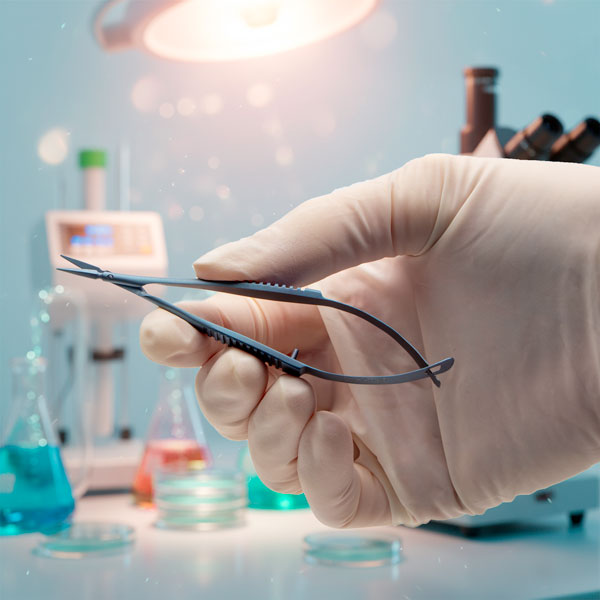
In small animal veterinary surgery, precision is vital, and success often depends on the smallest details. Whether you're performing a routine spay on a kitten or excising a mass from an elderly retriever, even the smallest instruments can shape a patient’s outcome. Among these, thumb forceps, commonly referred to as tweezers, quietly play a starring role in surgical success.
- - July 31, 2025
With various options available for treated or untreated cell culture surfaces, how do you choose the right one for your research? From synthetic polycationic coatings like poly-L-lysine to ECM proteins like fibronectin and vitronectin, each surface treatment offers unique benefits tailored to specific cell specific applications and experimental goals. The choice impacts more than just adhesion. It can influence cell viability, behavior, differentiation, and even affect experimental reproducibility.
In this final post of our series, we’ll summarize the five coatings available on WPI’s our FluoroDish™ glass-bottom culture dishes and help you match the right surface to your application.
- - July 28, 2025
When your cell culture experiments require more than just adhesion, when you need to guide cell behavior, support differentiation, or mimic in vivo tissue structure, fibronectin could be one of the suitable choices.
Fibronectin is a high-molecular-weight glycoprotein found naturally in the extracellular matrix (ECM), where it plays a vital role in cell signaling, migration, and morphogenesis. In vitro, it supports both structural attachment and biochemical communication through integrin-mediated pathways. In WPI’s 35 mm fibronectin coated FluoroDish™ with a 23 mm glass bottom provides a biologically active microenvironment, perfect for small-format, high-qualityimaging experiments where clarity and precision matter.
- - July 25, 2025
Culturing human pluripotent stem cells (hPSCs) requires more than a supportive surface, it demands consistency, control, and clinical readiness. Vitronectin is commonly used for culturing hPSCs since vitronectin supports growth and differentiation of these stem cells.
Vitronectin is an extracellular matrix (ECM) glycoprotein that promotes cell adhesion and survival via integrin binding. It plays a critical role in xeno-free, feeder-free culture systems—especially for labs cultivating embryonic stem cells (ESCs) or induced pluripotent stem cells (iPSCs). WPI’s Vitronectin coated 35 mm FluoroDish™ with a 23 mm glass bottom viewing window, offers a biologically functional, imaging-optimized environment ideal for maintaining stem cells in their most pristine state.
- - July 15, 2025
University research labs face unique challenges when it comes to proper instrument handling, particularly given the constant rotation of students, postdocs, and visiting researchers. Poor handling practices can derail research projects, waste limited funding, and compromise student safety.
- - June 30, 2025
Micromanipulators play a critical role in electrophysiology, as well as in micro/nanofabrication. Each application sector requires accurate positioning yet demands of a micromanipulator rig varies based on the specific application focus. From positioning for a patch clamp setup, in vivo placement, to fabrication of PCB/MEMS boards, each area has specific requirements that must be considered when deciding which micromanipulator is right for you. WPI offers several types of electrophysiology-focused products to suit your setup, as well as a breadth of micromanipulators to choose from for your specific application focus.
- - June 25, 2025
In today’s research and surgical environments, the quality of your tools can directly affect the quality of your results. For decades, WPI has supported life science researchers and microsurgeons with reliable, precision-engineered instruments. Among them, the scalpel, which is simple in concept but powerful in impact and continues to evolve to meet modern demands.
At WPI, our complete lineup of hand-held scalpels, disposable surgical knives, sapphire blades, and ergonomic handles are engineered to support the most demanding research and surgical applications, ensuring clean, consistent, and precise performance in critical applications. Here’s how today’s scalpels are improving outcomes at the bench and in the field.
- - June 22, 2025
In most cell culture protocols, improving adhesion plays a critical role, but not every experiment necessarily requires coatings that remain stable long-term or biologically complex substrates. That’s where Poly-L-Lysine (PLL) proves to be a suitable choice
PLL is a synthetic polymer that enhances cell attachment by increasing the surface’s positive charge, helping negatively charged, anchorage-dependent cells adhere more readily to otherwise non-adhesive surfaces like glass or plastic. While it doesn’t mimic the extracellular matrix, PLL remains a trusted choice for labs needing short-term adhesion for cell culture studies of shorter duration, especially during transfection, immunostaining, or fixed-cell imaging. WPI’s 35mm FluoroDish™ with 23 mm glass-bottom culture dishes, provides a consistent, high-clarity platform perfect for observing and documenting cellular events with confidence
- - June 16, 2025
Not all mammalian cell types are simple to grow and maintain in cultures. Some cell types, e.g., NIH 3T3 cells, adhere onto tissue culture plastics easily and has fast doubling time. Some cell types, e.g., neurons are relatively difficult to grow in cultures since these cells tend to adhere poorly onto untreated surfaces and have slower doubling time. These neurons are highly sensitive, anchorage-dependent cells and often need more than a standard culture surface to survive, attach, and develop healthy and normal structural extensions. That’s why many neuroscientists rely on poly-D-lysine (PDL), a synthetic coating that provides stable, long-term support for these neuronal cells
PDL creates a positively charged surface that promotes robust adhesion of cells with low natural affinity to glass or plastic. Unlike its close cousin poly-L-lysine (PLL), PDL is resistant to enzymatic degradation, making it the preferred choice for long-term or extended culture protocols. With WPI’s 35 mm PDL coated...more
- - June 16, 2025
In the world of surgical tools and laboratory precision, even subtle design differences can make a big impact. When it comes to surgical scissors, the choice between straight and curved blades is more than a matter of personal preference. It’s about matching the right tool to the right application.
Whether you're performing surface-level dissections, working deep in tissue, or handling delicate anatomical structures, understanding how blade geometry affects visibility, control, and access is essential. In this article, we’ll explore the unique benefits of both straight and curved surgical scissors, outline the applications where each excels, and help you make informed choices for your specific workflow.

Recent Posts