Page 4 - Epithelial Physiology
- - September 05, 2023
The EVOM™ Manual requires an electrode for use. Choose an electrode suitable for your application. Here's a matrix to help you choose an appropriate EVOM electrode.
- - August 01, 2023
Syringes have a wide range of applications in a laboratory setting due to their ability to accurately measure and dispense liquids. Common lab uses include transferring precise volumes of liquid samples from one container to another for dilution, mixing, reagent preparation, and sample extraction. You may be using them for analytical techniques, like chromatography (such as high-performance liquid chromatography (HPLC) or gas chromatography), spectrophotometry, and titration. Syringes are often used for precise dosing and delivery of reagents during chemical reactions and synthesis processes, or in life science research for aspirating media, adding growth factors or nutrients, and transferring cells. In medical and veterinary research, syringes are used for the injection or infusion of drugs, vaccines, or contrast agents into animal models or cell cultures. Researchers can use lab syringes to collect liquid samples, particularly in environmental monitoring, water quality analysis, or biological...more
- - July 27, 2023
WPI’s EVOM™ Technology is a well-established, non-invasive method to verify tissue integrity or barrier function, confluence, and tissue properties in 2-D and 3-D formats. To get the best TEER measurement results with WPI’s EVOM technology, you need to select suitable electrodes based on your application.
Here are some criteria to consider when selecting a TEER measurement electrode.
- - July 24, 2023
In 2022, the United States Food and Drug Administration (FDA) approved 37 new drugs, of which 20 were chemical entities and 17 were biologics. In 2023, drug discovery remains strong with many new advancements a result of changing landscapes in both the types of drugs that are being developed and the new and innovative assay that are being launched to evaluate drugs preclinically. Therapeutic development is still highly focused on diseases that affect large populations of people for which there are lack of effective treatments, with 2023’s most anticipated drug launches expected to be in areas of cancer, Alzheimer’s disease, cardiovascular disease, and ulcerative colitis.
- - July 19, 2023
In 2022, the United States Food and Drug Administration (FDA) approved 37 new drugs, of which 20 were chemical entities and 17 were biologics. In 2023, drug discovery remains strong with many new advancements a result of changing landscapes in both the types of drugs that are being developed and the new and innovative assay that are being launched to evaluate drugs preclinically. Therapeutic development is still highly focused on diseases that affect large populations of people for which there are lack of effective treatments, with 2023’s most anticipated drug launches expected to be in areas of cancer, Alzheimer’s disease, cardiovascular disease, and ulcerative colitis.
- - May 25, 2023
If the EVOM™ Auto software switches from Resistance to TEER mode while you are selecting menu options, here's a quick tip:
Be careful when selecting Resistance mode, do not tap the background window and do not click on the side arrows.
Tapping the background window will switch you to TEER mode.
Instead, tap an option on the forefront square window to stay in Resistance mode.
- - May 02, 2023
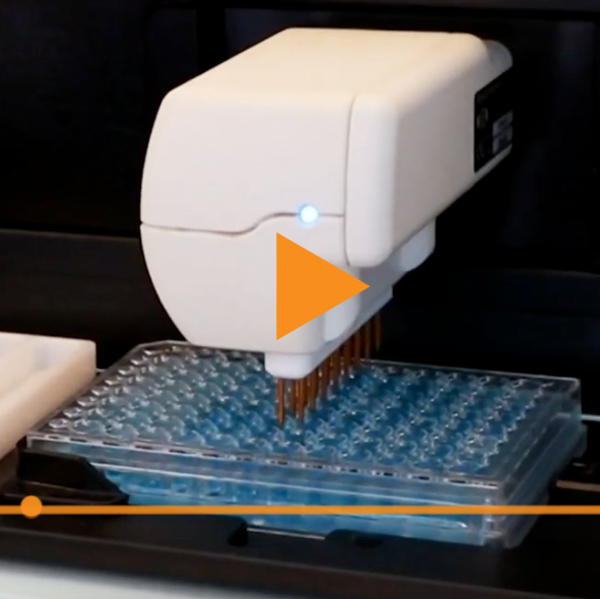
The EVOM™ Auto automates measurements of TEER in epithelial or endothelial monolayers cultured on high throughput screening 96-well plates utilizing our innovative EVOM™ technology, qualitatively measuring cell monolayer health and quantitatively measuring cell confluence by determining an increase or a plateau in tissue resistance.
The video below shows details the features and functions of the Experiment window on the EVOM™ Auto:
- - April 27, 2023
The EVOM™ Auto automates measurements of TEER in epithelial or endothelial monolayers cultured on high throughput screening 96-well plates utilizing our innovative EVOM™ technology, qualitatively measuring cell monolayer health and quantitatively measuring cell confluence by determining an increase or a plateau in tissue resistance.
The video below shows you how to schedule an operation on the EVOM™ Auto:
- - April 25, 2023
The EVOM™ Auto automates measurements of TEER in epithelial or endothelial monolayers cultured on high throughput screening 96-well plates utilizing our innovative EVOM technology, qualitatively measuring cell monolayer health and quantitatively measuring cell confluence by determining an increase or a plateau in tissue resistance.
The video below shows you how to stabilize the electrode array on the EVOM™ Auto:
- - April 20, 2023
The EVOM™ Auto automates measurements of TEER in epithelial or endothelial monolayers cultured on high throughput screening 96-well plates utilizing our innovative EVOM™ technology, qualitatively measuring cell monolayer health and quantitatively measuring cell confluence by determining an increase or a plateau in tissue resistance.
The video below shows you how to chloride the electrode array on the EVOM™ Auto:
- - April 18, 2023
The EVOM™ Auto automates measurements of TEER in epithelial or endothelial monolayers cultured on high throughput screening 96-well plates utilizing our innovative EVOM™ technology, qualitatively measuring cell monolayer health and quantitatively measuring cell confluence by determining an increase or a plateau in tissue resistance.
The video below shows you how to create a plate file on the EVOM™ Auto:
- - April 13, 2023
The EVOM™ Auto automates measurements of TEER in epithelial or endothelial monolayers cultured on high throughput screening 96-well plates utilizing our innovative EVOM™ technology, qualitatively measuring cell monolayer health and quantitatively measuring cell confluence by determining an increase or a plateau in tissue resistance.
The video below shows you how to download and how to delete a data file EVOM™ Auto:
- - April 11, 2023
The EVOM™ Auto automates measurements of TEER in epithelial or endothelial monolayers cultured on high throughput screening 96-well plates utilizing our innovative EVOM™ technology, qualitatively measuring cell monolayer health and quantitatively measuring cell confluence by determining an increase or a plateau in tissue resistance.
The video below shows you how to run an experiment on the EVOM™ Auto:
- - April 06, 2023
The EVOM™ Auto automates measurements of TEER in epithelial or endothelial monolayers cultured on high throughput screening 96-well plates utilizing our innovative EVOM™ technology, qualitatively measuring cell monolayer health and quantitatively measuring cell confluence by determining an increase or a plateau in tissue resistance.
The video below shows you the features of the homepage on the EVOM™ Auto:
- - April 04, 2023
In vitro models have employed two common methods to quantify changes in endothelial barrier integrity: transepithelial/transendothelial electrical resistance (TEER) and tracer compound permeability.1 TEER is a non-invasive method that quantifies changes in electrical conductance to measure confluency and barrier integrity. Tracer compound permeability uses molecules of defined molecular weights to measure the size exclusion capacity of cell barriers (e.g., 4 kDa FITC-dextran or FD4).1 Using the EVOM™ Manual (EVOM-MT-03-01) with the EndOhm TEER electrode and cell culture permeable supports, this application note describes how to non-invasively evaluate endothelial barrier integrity after cytokine treatment and provides a method to identify vasoactive compounds that have the potential to induce vascular injury. Tracer compound permeability studies are combined with TEER evaluation to elucidate treatment-induced impacts on both intercellular junctions and paracellular transport (Fig...more

Recent Posts