Page 6 - Epithelial Physiology
- - May 14, 2020
The NEW EVOM3 Epithelial Volt/Ohm Meter delivers improved workflow efficiency, increased stability and more repeatable measurements than traditional Trans Epithelial Electrical Resistance (TEER) meters. Here are seven things you will love about the new EVOM3.
- - April 12, 2020
Epithelial and endothelial cells are known for their barrier function like selective permeability. Lung tissue is comprised of epithelial cellular layers, residing adjacent to endothelial layers and allowing exchange of oxygen and carbon dioxide between lung and blood. Currently, the biomedical research community’s major focus area is to understand the details of the infection caused by this novel coronavirus (2019-nCoV) or by similar viruses. This new virus can disrupt the lung’s normal cleaning ability to get rid of foreign particles in the lung, and the selective permeability or barrier function of the lung may become severely impaired. The adverse physiological effect may be sustained once the inflammatory cascade is initiated.
- - February 20, 2019
WPI EndOhm chambers are used with WPI's EVOM2 meter for making TEER (transepithelial electrical resistance) measurements. After heavy use your background resistance measurement may start to rise. Your electrodes may need to be resurfaced to remove buildup of proteins, sugars and biological materials. Here Subhra demonstrates how to clean and resurface your EndOhm chambers.
- - February 20, 2019
WPI EndOhm chambers are used with WPI's EVOM2 meter for making TEER (transepithelial electrical resistance) measurements. Each EndOhm chamber comes with a "spacer" disk for calibrating the gap between the two chamber electrodes. A consistent gap ensures reliable measurements. Here Subhra shows how to calibrate your chambers.
- - November 19, 2015
Are you ready to perform experiments involving a cultured cell monolayer? If your monolayer has not reached confluence, you may have holes or gaps in the monolayer that would prevent collection of valid experimental data. When confluence is reached, the electrical resistance across the monolayer peaks and then plateaus. The EVOM2 meter was designed specifically for this application.
The EVOM2 is the ideal meter for use when you are making manual TEER measurements on small batches of cell cultures and do not require a high throughput system.
- - February 01, 2015
Here are some frequently asked questions (FAQ) about TEER measurement using an EVOM2.
- - November 10, 2014
The EVOM2 is the classic, hand-held instrument for making Trans Epithelial Electrical Resistance (TEER) measurements. The REMS system adds a robot and data recording for automated TEER measurements. There may be times when you don't have a robot, but would still like to have the data recording capabilities of the REMS system. With a little ingenuity, you can do just that. Here, we will show you how you can add data recording to your standard EVOM2.
- - October 10, 2013
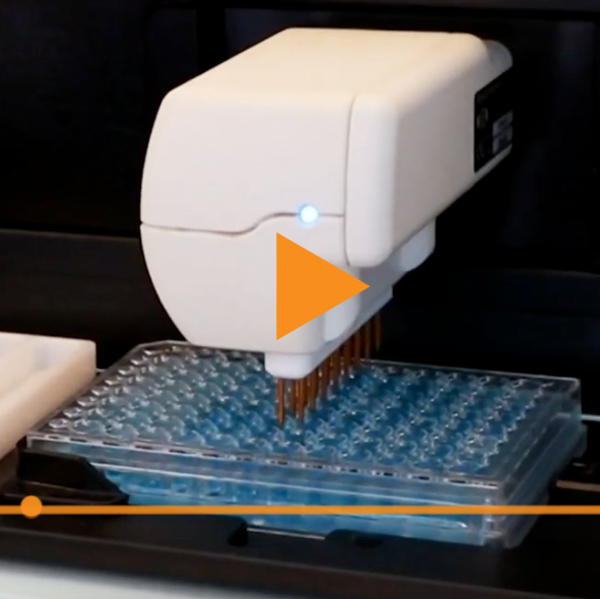
With the development of a High Throughput Screening (HTS) protocol for faster drug discovery, a new line of cell culture filter plates have been introduced by several major cell culture insert manufacturers. These HTS plates normally have either 24 or 96 individual cell culture inserts "bonded" together as one plate so that it can be handled by a robot apparatus. In response to these developments, WPI has developed an automatic REMS system and a manual electrode, STX100, for TEER measurements using HTS plates.
- - October 10, 2013
Transepithelial Electrical Resistance TEER measurements is the most convenient, reliable and non-destructive method for evaluating and monitoring the growth of epithelial tissue cultures in vitro. The confluence of the cellular monolayer is quickly determined by a sharp increase in TEER. TEER measurement technology, which was first introduced by WPI in the mid-1980's, has since been perfected and expanded to include a range of TEER related manual and automatic instrumentation, including:
EVOM² - Manual TEER measurement of epithelial cells in 24- and 96-well plates
REMS AutoSampler - Automated system for High Throughput Screening (HTS) - - October 10, 2013
WPI's EndOhm chambers were designed for making TEER measurement of endothelial cell cultures in individual cups. The EndOhm chambers feature:
Compatible with EVOM²
Improved accuracy of 1-2Ω
Accommodates 6mm, 12mm, 24mm cups and Costar Snapwell cup
Sterilized with EtO, alcohol or a bactericide - - April 29, 2013
EVOM was the first instrument designed to perform routine Trans Epithelial Electrical Resistance (TEER) measurement in tissue culture research. EVOM2 is the next generation, redesigned for greater usability.
The EVOM2 sports the following features:
- - April 23, 2013
The World Precision Instruments (WPI) EVOM2 is used for making trans epithelial electrical resistance (or TEER) measurements. We recommend that you test your EVOM2 before you use it for the first time and then periodically after that. If there is a concern that the meter or the electrode is not functioning properly, test the meter first. This video shows how to test the meter.
- - April 23, 2013
The World Precision Instruments (WPI) EVOM2 is used for making trans epithelial electrical resistance (or TEER) measurements. Two silver/silver chloride pellets are used for the electrodes. The chloride ion tends to migrate, which is a reversible reaction. But, because of this chloride ion swapping, the electrodes need to be polarized before each use. Before using the meter for making voltage measurements, equilibrate the electrodes. This video shows you how.
- - April 23, 2013
A volt-ohm meter may apply a constant voltage of unknown current across the membrane and damage the cells electrically and also leave a chemical imbalance in the electrodes. WPI experimented with two volt-ohm meters:
- An expensive Fluke meter applies a DC voltage of 50 to 80mV, which (in a 1000Ω membrane) will pass 80µA. With a 200Ω membrane, this is 400µA.
- A discount meter puts out 500mV DC, which will pass 500µA through the membrane. With a 200Ω membrane, this is 2.5mA.
Recent Posts