Page 3 - EVOM
- - March 16, 2023
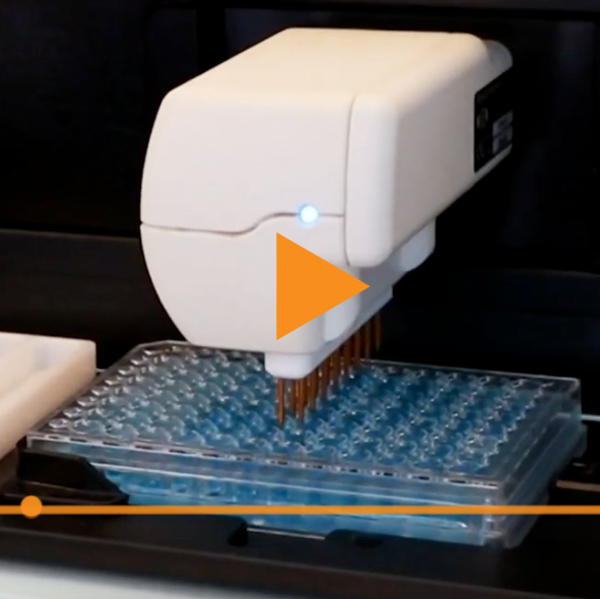
World Precision Instruments' (WPI) legacy Robotic Epithelial Measurement System (REMS) and the new advanced, upgraded version of REMS, EVOM™ Auto, are high-throughput, automated transepithelial/transendothelial electrical resistance (TEER) measurement systems. These robotic systems, combined with EVOM™ technology, expedite TEER measurements.
- - March 03, 2023
Have you got the new EVOM Auto TEER Measurement System for 96-well HTS plates? This short videos shows how easy it is to setup.
- - July 19, 2022
EVOM™ Manual is WPI's newest instrument to measure Trans Epithelial Electrical Resistance (TEER). Let's look at what comes with the system and how easy it is to setup.
- - July 19, 2022
WPI's EVOM system is popular in the research community, both in academia and in industry, and it is commonly used for the evaluation of mammalian cellular health by measuring transepithelial/transendothelial electrical resistance (TEER or TER) of cellular layers.
EVOM™ Manual is powered by the same EVOM™ technology as older EVOM models (EVOMX, EVOM, EVOM2 and EVOM3). It has advanced features for performing experiments more easily. With the new touchscreen display you can now store data as Microsoft® Excel files on a USB flash drive. Just remove the flash drive with all your recorded data from the EVOM™ Manual and plug it into a computer to access and plot your data. It is as simple as it sounds.
- - July 12, 2022
WPI’s EVOM™ technology is the gold standard for delivering stable and repeatable Trans Epithelial Electrical Resistance (TEER) measurements. Here are nine reasons to trust the new EVOM Manual TEER Meter for qualitatively measuring cell monolayer health and quantitatively measuring cell confluence.
- - May 30, 2022
WPI’s EVOM™ Manual is the gold standard for delivering stable and repeatable Trans Epithelial Electrical Resistance (TEER) measurements. The EVOM™ Manual qualitatively measures cell monolayer health and quantitatively measures cell confluence by determining an increase or a plateau in tissue resistance detected using our innovative EVOM™ technology. The main display window has lots of information. Here’s a quick overview. You can download the infographic for a handy reference.
- - May 23, 2022
WPI’s EVOM™ Manual is the gold standard for delivering stable and repeatable Trans Epithelial Electrical Resistance (TEER) measurements. The EVOM™ Manual is the newest TEER meter. It qualitatively measures cell monolayer health and quantitatively measures cell confluence by determining an increase or a plateau in tissue resistance detected using our innovative EVOM™ technology. WPI’s state of the art EVOM™ technology provides you with real-time, valuable feedback during experimental measurements.
- - May 19, 2022
The new STX4 electrode works with the EVOM3, and the blades are replaceable. EVOM3 is used for making TEER (TER) Measurements in cell culture plates. Here's a quick tutorial to show you how to replace the blades.
- - April 19, 2021
by Benjamin Dubansky, PhD, Animal Physiologist/Researcher
The EVOM is a special kind of voltmeter for measuring electrical properties across a layer of cells in culture or a biological membrane. Here's a few things I like about the new EVOM3.
- - April 19, 2021
by Benjamin Dubansky, PhD, Animal Physiologist/Researcher
An Ussing Chamber is used when performing barrier studies across an excised epithelial tissue. Similar measurements can be made in well plates using an EVOM series TEER Measurement Meter, which is used for epithelial tissue that is grown to confluence in a cell culture well. While EVOM measurements are only qualitative, your throughput is much greater with an EVOM3. The EVOMs are portable and much more economical than an Ussing Chamber. Here Ben Dubansky, PhD explains the differences between EVOMs and Ussing chambers.
- - April 18, 2021
by Benjamin Dubansky, PhD, Animal Physiologist/Researcher
The EVOM is a special kind of voltmeter for measuring electrical properties across a layer of cells in culture or a biological membrane. It is the most commonly used commercial system for measuring across a layer of cultured cells. We are measuring TEER (TER) - Transepithelial Electrical Resistance. The EVOM3 allows us to zoom in and measure either resistance or voltage across these membranes or cells in culture.
- - November 27, 2018
Transepithelial electrical resistance (TEER), also referred as the transepithelial resistance (TER) is used to monitor cellular health. TEER is comprised of measurements of the transcellular pathway (i.e., resistance due to an individual cell) and paracellular pathway (i.e., resistance due to the formation of the cellular junctions). TEER is commonly used to monitor cellular confluence. TEER values can indicate changes in the cellular monolayer permeability, showing the monolayer barrier function of cells such as, endothelial (brain microvessel) and epithelial (alveolar, kidney, and intestinal) cells. High TEER values generally reflect tighter cellular monolayers or cellular junctions (Lewis 1996, Matter and Balda 2003, Denker and Sabath 2011). A few major benefits of WPI TEER measurement systems are described below. The TEER values (electrophysiological analysis) can be combined with other analysis methods to further understand a biological phenomenon. For example, a decrease in the TEER...more
- - February 01, 2015
Here are some frequently asked questions (FAQ) about TEER measurement using an EVOM2.
- - November 10, 2014
The EVOM2 is the classic, hand-held instrument for making Trans Epithelial Electrical Resistance (TEER) measurements. The REMS system adds a robot and data recording for automated TEER measurements. There may be times when you don't have a robot, but would still like to have the data recording capabilities of the REMS system. With a little ingenuity, you can do just that. Here, we will show you how you can add data recording to your standard EVOM2.
- - October 10, 2013
With the development of a High Throughput Screening (HTS) protocol for faster drug discovery, a new line of cell culture filter plates have been introduced by several major cell culture insert manufacturers. These HTS plates normally have either 24 or 96 individual cell culture inserts "bonded" together as one plate so that it can be handled by a robot apparatus. In response to these developments, WPI has developed an automatic REMS system and a manual electrode, STX100, for TEER measurements using HTS plates.

Recent Posts