Page 4 - EVOM
- - October 10, 2013
Transepithelial Electrical Resistance TEER measurements is the most convenient, reliable and non-destructive method for evaluating and monitoring the growth of epithelial tissue cultures in vitro. The confluence of the cellular monolayer is quickly determined by a sharp increase in TEER. TEER measurement technology, which was first introduced by WPI in the mid-1980's, has since been perfected and expanded to include a range of TEER related manual and automatic instrumentation, including:
EVOM² - Manual TEER measurement of epithelial cells in 24- and 96-well plates
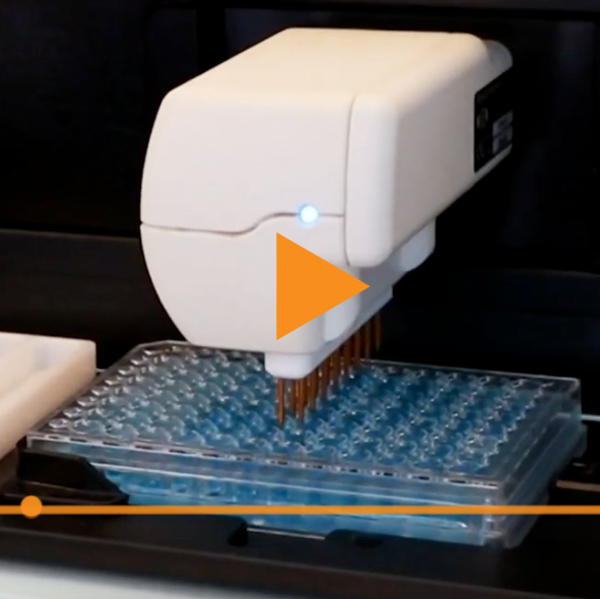
REMS AutoSampler - Automated system for High Throughput Screening (HTS) - - April 29, 2013
EVOM was the first instrument designed to perform routine Trans Epithelial Electrical Resistance (TEER) measurement in tissue culture research. EVOM2 is the next generation, redesigned for greater usability.
The EVOM2 sports the following features:
- - April 23, 2013
The World Precision Instruments (WPI) EVOM2 is used for making trans epithelial electrical resistance (or TEER) measurements. We recommend that you test your EVOM2 before you use it for the first time and then periodically after that. If there is a concern that the meter or the electrode is not functioning properly, test the meter first. This video shows how to test the meter.
- - April 23, 2013
The World Precision Instruments (WPI) EVOM2 is used for making trans epithelial electrical resistance (or TEER) measurements. Two silver/silver chloride pellets are used for the electrodes. The chloride ion tends to migrate, which is a reversible reaction. But, because of this chloride ion swapping, the electrodes need to be polarized before each use. Before using the meter for making voltage measurements, equilibrate the electrodes. This video shows you how.
- - April 23, 2013
A volt-ohm meter may apply a constant voltage of unknown current across the membrane and damage the cells electrically and also leave a chemical imbalance in the electrodes. WPI experimented with two volt-ohm meters:
- An expensive Fluke meter applies a DC voltage of 50 to 80mV, which (in a 1000Ω membrane) will pass 80µA. With a 200Ω membrane, this is 400µA.
- A discount meter puts out 500mV DC, which will pass 500µA through the membrane. With a 200Ω membrane, this is 2.5mA.
Recent Posts