Page 2 - Microinjection
- - July 05, 2023
In any laboratory, having key lab supplies is almost as important as having the major equipment. Choosing a reputable supplier of these necessary supplies is as important as having quality laboratory supplies when you need them. WPI wants to be your partner in early drug discovery, and we stock a wide variety of lab supplies, many of which can ship the same business day. Having a variety of lab supplies ready to ship makes us a dependable research partner. Here are some of the popular supplies that we keep on hand to meet your needs for your upcoming experiment
- - June 30, 2023
In any laboratory, having key lab supplies is almost as important as having the major equipment. Choosing a reputable supplier of these necessary supplies is as important as having quality laboratory supplies when you need them. WPI wants to be your partner in early drug discovery, and we stock a wide variety of lab supplies, many of which can ship the same business day. Having a variety of lab supplies ready to ship makes us a dependable research partner. Here are some of the popular supplies that we keep on hand to meet your needs for your upcoming experiment
- - August 05, 2022
The ATC2000 is a low noise heating system for maintaining animal body temperature during expirimental procedures. Here we show you how to use the adaptive mode on the ATC2000 system.
- Press the Config button to access the configuration menu. Press the Config button again until the adaptive mode Enable displays.
NOTE: If the temperature source is set to heater plate, then the adaptive mode cannot be enabled.
2. Press the Up or Down button to enable or disable adaptive mode.
3. Press the Display button to save the new parameters or press the Config button to toggle through the rest of the parameters.
Once the adaptive mode is enabled, Adaptive appears as the mode on the main display window. If you press the Display button again, the alternate temperature displays along with a timer that counts up from the last sampled time. In this case, the temperature was sampled 5 minutes and 42 seconds ago. If the interval is set to 10 minutes, the temperature will be sampled again in...more
- - April 27, 2022
The ATC2000 is a low noise heating system for maintaining animal body temperature during experimental procedures. The ATC2000 uses a digital PID controller to regulate the application of power to the heating plate to achieve the desired temperature at the monitored sensor. PID stands for Proportional, Integral and Differential. Here’s how PID control works:
The default set point is 37°C, but you can configure it. The controller calculates the error, which is the difference between the present temperature and the desired temperature.
Error = Monitored temperature – Set point
Three individual components are derived by applying different functions to the error.
The default set point is 37°C, but you can configure it. The controller calculates the error, which is the difference between the present temperature and the desired temperature.
Error = Monitored temperature – Set point
Three individual components are derived by applying different functions to the
- The error is multiplied by the proportional...more
- - February 03, 2022
Overview of the MICRO-ePUMP
Designed to simplify intracellular injection and a variety of other microinjection tasks, the MICRO-ePUMP uses carefully regulated air pressure for injecting cells with fluid. Injected volumes range from picoliters to nanoliters. Timing, injection pressure and compensation pressure are adjusted independently using the touch screen interface. Time intervals can range from 2 seconds down to 10 ms or less, depending on the injection pressure setting. The injection pressure interval is triggered using the foot switch.
The MICRO-ePUMP is designed to inject very small quantities of fluids, such as drugs, into cells or small organelles. Two different positive pressures may be applied with a precision timing circuit that switches between the two pressure automatically.
- The port supplies positive pressure for high-pressure ejection.
- The pressure port maintains a low positive “compensation” pressure to the injecting pipette between injection pulses to prevent fluid uptake...more
- - July 22, 2021
Do you want to take the next step in your CRISPR-CAS9 projects, making the injection of biomolecules in your cell lines more efficient? You can now increase the viability of injected embryos with WPI’s MICRO-ePORE, which offers improved repeatability and functionality for pinpoint cell penetration for targeted microinjections in transgenesis.
Improve Embryo Survival with Pinpoint Cell Penetration
Principle of MICRO-ePORE™ Technology
- Classic Microinjection of biomolecules with capillaries causes permanent damage to the cell membrane, and the chance of lysis is high.
- Electroporation is a shot-gun, random approach that cause lots of membrane holes in cells, also increasing the chance of lysis.
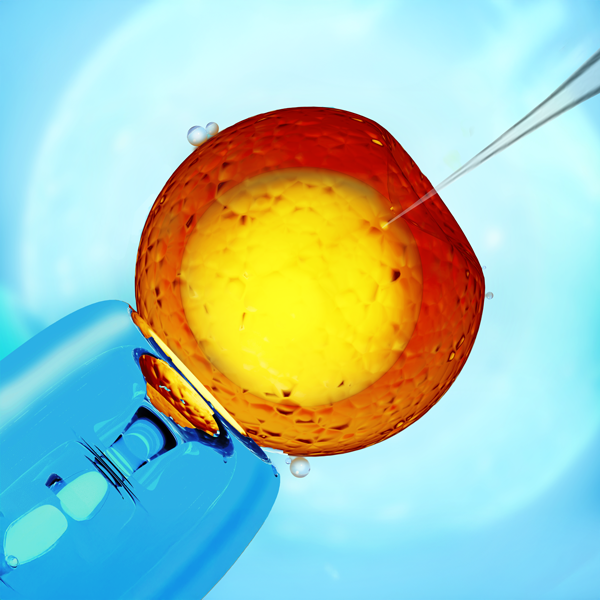
- The MICRO-ePORE uses a very localized rearrangement of the charged double lipid membrane, allowing the biomolecules solution to get into the cells during injection. This leaves the rest of the membrane intact, reducing lysis and improving cell survival.
MICRO-ePORE in the Field
The MICRO-ePORE...more
- - April 26, 2021
The PUL-1000 is a microprocessor controlled, four-stage, horizontal puller for making glass micropipettes or microelectrodes. Here is how to run a program that will pull two identical microelectrodes.
Loading a Program
We will use the keypad to navigate through the display.
- Use the arrows to navigate to LOAD (00). The top and bottom arrows on the keypad navigate numbers in increments of 1. The left and right arrows on the keypad navigate numbers in increments of 10. Press ENTER. The number will start blinking.
- Use the arrows to navigate to the program number you would like load. Once you reach the desired program, press ENTER to run the program and pull your glass.
Creating a New Program
- Use the arrows to navigate to STEP 1 - HEAT. Press ENTER. The number will start blinking.
- Use the arrows to set the desired value for the heat. Press ENTER.
- Navigate to STEP 1 – FORCE. Press ENTER. The number will start blinking.
- Use the arrows to set the desired value of force. Press ENTER.
- Navigate...more
- - April 22, 2021
The PUL-1000 is a microprocessor controlled, four-stage, horizontal puller for making glass micropipettes or microelectrodes. Here is a quick overview to get you started quickly.
Quick Start Setup
- Plug the power cord into the wall outlet. An LED light on the power supply illuminated when the unit is connected to power.
- Plug the power cord into the rear panel of the PUL-1000. Then, the power switch on the side panel illuminates.
- Press the Power button to turn on the display.
- To open the glass capillary clamps, place your thumb under the clamp and depress the release button with your index finger. This allows the carriages to move freely.
- Push the carriages together toward the center.
- Install the silicone glass capillary clamp pads matching the outer diameter (OD) of the glass capillary, by sliding them into the clamp pad spots on the clamps.
- Mount the glass capillary onto the carriage and secure it with the glass clamps.
- On the LCD display, choose the correct sequence. If you do not...more
- - April 21, 2021
The PUL-1000 is a microprocessor controlled, four-stage, horizontal puller for making glass micropipettes or microelectrodes. Here we will see how to load a piece of glass into the carriage.
The glass capillary is held by clamps mounted on two movable carriages. Both carriages synchronously slide as a program is executed.
- Manually slide the carriages together when you are loading the glass.
- To open the clamps, place your thumb under the clamp and depress the release button with your index finger.
- Slide the glass capillary into the groove from one side. Slide it through the center of heating filament onto the other side. If you want two equivalent length micropipettes, be sure to center the glass in the filament.
- Secure the glass capillary with the clamps.
That’s it. Now you’re ready to load a program. If you have any questions, just give us a call.
- - April 21, 2021
The PUL-1000 is a microprocessor controlled, four-stage, horizontal puller for making glass micropipettes or microelectrodes. Here are the resolutions for some common issues with the puller.
Puller Stops
If the puller stops in the middle of a pull and the unit beeps, one of two issues may be the culprit.
- The unit may be over heating. Allow the unit time to cool down before attempting to pull more glass.
- If a program fails in the middle of a pull, you may have exceeded the parameters of the unit. For example, when you add up the distance of travel for all the stages, you may have exceeded the maximum range of travel. Check your program. You may need to alter the heating or travel parameters to conform with the unit’s maximums.
Glass Doesn’t Pull Well
If the glass does not pull well, look at one of these possible causes.
- The parameter may not be set properly for the properties of the new glass. Run the Glass Softening Test to establish a new baseline heating parameter.
- The filament...more
- - April 21, 2021
The PUL-1000 is a microprocessor controlled, four-stage, horizontal puller for making glass micropipettes or microelectrodes. We will show you how to run a glass softening test.
You should run the Softening Test when:
- You change the filament
- Lot numbers or capillary types change
- You create or modify a program
- The ambient environment changes
- Press the STOP key to quit any running program. The following window displays.
- Mount a glass capillary on the carriage.
- Press the START key to run the Glass Capillary Softening Test. The heating power increases gradually. The heating stops when the glass begins to move.
- Record the heating power. This is the baseline heating value for the glass type tested. It is a good starting point for the first stage of your program.
If you have any questions, just give us a call.
- - April 08, 2021
Let’s look at the PUL-1000, a microprocessor controlled, four-stage, horizontal puller for making glass micropipettes or microelectrodes. Here we will examine the design of the unit.
Tempered Glass Lid
For safety, the lid should be closed whenever you are pulling glass or moving the unit.
Capillary Glass Clamp Pads
These two silicone clamp pads securely hold the glass when you are pulling pipettes. Check the glass OD and install appropriate pads accordingly.
Heating Filament
The PUL-1000 comes with a circular platinum/iridium box filament, which may be easily replaced with a 2.5 x 2.5 mm box filament (WPI #13834).
Glass Groove
Slide a single piece of capillary glass into the groove from one side or the other. The groove helps line up the glass to slide easily through the filament and hold it in the proper position during pulling.
Carriage
The carriage should move freely when the clamps are unlocked. It slides apart as the glass is pulled. Then, you can manually slide the two ends...more
- - February 01, 2021
WPI pre-pulled pipettes (MicroTips) are a popular choice for pharmaceutical companies carrying out CCIT (Closed Container Integrity Testing). Each MicroTip is individually tested and inspected and can be shipped with a certificate of compliance.
CCIT is an important part in understanding the biological safety and suitability of primary packaging. It is used to assess the potential of the container closure system to maintain a sterile barrier or to prevent leakage resulting in contamination or loss of the drug. A good overview of Understanding Container Closure Integrity Testing can be found on the American Pharmaceutical Review site.
WPI can quickly supply your need for consistently sized, pre-pulled, glass, calibrated micropipettes. Tip diameters (ID) range from 0.1 to 10 µm. Silanized Tips (Luer Shank) are available. Silanization waterproofs the glass to retard when inserting into cells. This will not let the outside fluid run down the glass pipettes and get inside...more
- - January 28, 2021
The system depicted includes components often favored by researchers:
- MICRO-ePUMP Pneumatic PicoPump with built in MICRO-ePORE™ Cell Penetrator to facilitate microinjections
- SU-P1000 Micropipette Puller
- M4C Stand
- M3301R Micromanipulator
- PZMTIII Microscope with Optional Lighted Base with Articulating Mirror and optional PRO-300 HDS Camera and View Screen
- E2XX Micropipette Storage Jar
- Z-MOLDS Microinjection and Transplantation Molds
- 14003-G Vannas spring scissors
- Glass Capillaries
- 77020 Glass Tweezers
- FluoroDish Optical Grade Glass Bottom Culture Dishes
Whatever your needs, WPI offers a range of equipment to fill your requirements.
Empowering Scientists with Reliable Instruments
Serving scientists for over 50 years, WPI offers a variety of instruments for microinjection including pumps, pipetters, microscopes and more. One of our most popular pumps for microinjection is the PV850 Pneumatic PicoPump.
The PV850...more
- - January 27, 2021
World Precision Instruments (WPI) offers a broad range of research instruments for zebrafish (Danio Rerio) research, from the time the genetics of the subject are modified through the point where the physiological effects of the change are monitored. Whether researchers are performing microinjection or making cardiovascular measurements, the WPI product line includes instruments for research on oocytes, embryos, larvae and adult zebrafish.
Enhanced Microinjection Efficiency for Genetic Modification
The customizable Zebrafish Microinjection Toolbox includes components favored by researchers:
- MICRO-ePUMP Pressure Injector with built in MICRO-ePORE™ Cell Penetrator to facilitate microinjections
- SU-P1000 Micropipette Puller
- PZMTIII-MI/PZMIII-MI Trinocular or Binocular Microscope on lighted base with articulating mirror
- PRO-300HDS High Definition Camera and Monitoring System
- Accessories
The NANOLITER2020 Injector and the UMP3T-1 UltraMicroPump with SMARTouch Touchscreen Controller...more

Recent Posts