Page 2 - teer
- - March 16, 2023
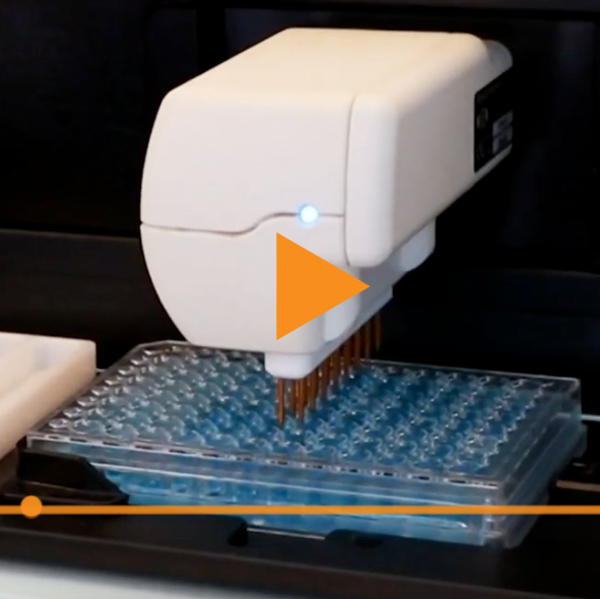
World Precision Instruments' (WPI) legacy Robotic Epithelial Measurement System (REMS) and the new advanced, upgraded version of REMS, EVOM™ Auto, are high-throughput, automated transepithelial/transendothelial electrical resistance (TEER) measurement systems. These robotic systems, combined with EVOM™ technology, expedite TEER measurements.
- - March 03, 2023
Have you got the new EVOM Auto TEER Measurement System for 96-well HTS plates? This short videos shows how easy it is to setup.
- - July 19, 2022
EVOM™ Manual is WPI's newest instrument to measure Trans Epithelial Electrical Resistance (TEER). Let's look at what comes with the system and how easy it is to setup.
- - May 23, 2022
WPI’s EVOM™ Manual is the gold standard for delivering stable and repeatable Trans Epithelial Electrical Resistance (TEER) measurements. The EVOM™ Manual is the newest TEER meter. It qualitatively measures cell monolayer health and quantitatively measures cell confluence by determining an increase or a plateau in tissue resistance detected using our innovative EVOM™ technology. WPI’s state of the art EVOM™ technology provides you with real-time, valuable feedback during experimental measurements.
- - May 19, 2022
The new STX4 electrode works with the EVOM3, and the blades are replaceable. EVOM3 is used for making TEER (TER) Measurements in cell culture plates. Here's a quick tutorial to show you how to replace the blades.
- - April 19, 2021
by Benjamin Dubansky, PhD, Animal Physiologist/Researcher
The EVOM is a special kind of voltmeter for measuring electrical properties across a layer of cells in culture or a biological membrane. Here's a few things I like about the new EVOM3.
- - April 19, 2021
by Benjamin Dubansky, PhD, Animal Physiologist/Researcher
An Ussing Chamber is used when performing barrier studies across an excised epithelial tissue. Similar measurements can be made in well plates using an EVOM series TEER Measurement Meter, which is used for epithelial tissue that is grown to confluence in a cell culture well. While EVOM measurements are only qualitative, your throughput is much greater with an EVOM3. The EVOMs are portable and much more economical than an Ussing Chamber. Here Ben Dubansky, PhD explains the differences between EVOMs and Ussing chambers.
- - April 18, 2021
by Benjamin Dubansky, PhD, Animal Physiologist/Researcher
The EVOM is a special kind of voltmeter for measuring electrical properties across a layer of cells in culture or a biological membrane. It is the most commonly used commercial system for measuring across a layer of cultured cells. We are measuring TEER (TER) - Transepithelial Electrical Resistance. The EVOM3 allows us to zoom in and measure either resistance or voltage across these membranes or cells in culture.
- - May 14, 2020
The NEW EVOM3 Epithelial Volt/Ohm Meter delivers improved workflow efficiency, increased stability and more repeatable measurements than traditional Trans Epithelial Electrical Resistance (TEER) meters. Here are seven things you will love about the new EVOM3.
- - October 10, 2013
Transepithelial Electrical Resistance TEER measurements is the most convenient, reliable and non-destructive method for evaluating and monitoring the growth of epithelial tissue cultures in vitro. The confluence of the cellular monolayer is quickly determined by a sharp increase in TEER. TEER measurement technology, which was first introduced by WPI in the mid-1980's, has since been perfected and expanded to include a range of TEER related manual and automatic instrumentation, including:
EVOM² - Manual TEER measurement of epithelial cells in 24- and 96-well plates
REMS AutoSampler - Automated system for High Throughput Screening (HTS) - - April 23, 2013
The World Precision Instruments (WPI) EVOM2 is used for making trans epithelial electrical resistance (or TEER) measurements. Two silver/silver chloride pellets are used for the electrodes. The chloride ion tends to migrate, which is a reversible reaction. But, because of this chloride ion swapping, the electrodes need to be polarized before each use. Before using the meter for making voltage measurements, equilibrate the electrodes. This video shows you how.
- - April 23, 2013
A volt-ohm meter may apply a constant voltage of unknown current across the membrane and damage the cells electrically and also leave a chemical imbalance in the electrodes. WPI experimented with two volt-ohm meters:
- An expensive Fluke meter applies a DC voltage of 50 to 80mV, which (in a 1000Ω membrane) will pass 80µA. With a 200Ω membrane, this is 400µA.
- A discount meter puts out 500mV DC, which will pass 500µA through the membrane. With a 200Ω membrane, this is 2.5mA.
Recent Posts