Page 30 - Blog
- - June 18, 2019
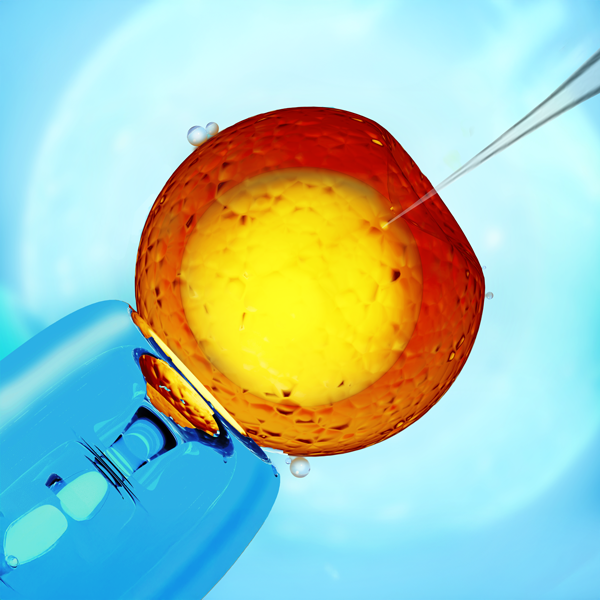
The new WPI MICRO-ePORE™ Pinpoint Cell Penetrator is a simple and versatile system that can be used for efficient microinjection of a diverse array of compounds and biomolecules into oocytes and pre-implantation stage mammalian embryos. Patent pending Flutter Electrode Technology assists in small, clean, precise membrane penetration without tearing or damaging the membrane. Here Gabe sets up the system and connects all the components.
Unpacking Your MICRO-ePORE™ System
Connecting Your MICRO-ePORE™ System
Connecting the MICRO-ePORE™ Electrode Holders
- - June 18, 2019
For intracellular dual or differential studies, WPI's Duo773 has separate negative capacity controls and built-in active filtering that allows the precise balancing of time constants for artifact-free differential measurement. It comes complete with two probe headstages, 1015Ω and 1011Ω probes to monitor signals from ion-specific micro-electrodes as well as KCl-filled electrodes. Jim shows you how to safely unpack and properly setup your new Duo773.
- - May 16, 2019
Optical measurements are important to researchers. Discover today how WPI has contributed with the recent release of Qualified Fiber.
- - April 29, 2019
Here are some frequently asked questions (FAQ) about Metal Microelectrodes.
...moreWhat metal type is best for my application?
W- Tungsten
Tungsten is a versatile and widely-used microelectrode material that offers a good balance between performance and cost.
ADVANTAGES
DISADVANTAGES
- Extremely strong and stiff metal provides probes with exceptional rigidity.
- Great for acute and chronic recording due to biocompatibility and lower cost.
- High corrosion resistance offers consistent long-term performance.
- Does not provide the same degree of electrochemical performance or stability as platinum-iridium alloy, making it a poor alternative for microstimulation.
- Lower charge transfer capacity of tungsten will result in larger, potentially unsafe interfacial potentials when applying the same stimulation current as to a platinum-iridium electrode.
- Certain pH or stimulation conditions can lead to tungsten corrosion.
PI- Platinum-Iridium Alloy
Platinum-Iridium alloy is considered by many to be the “gold standard”
- - March 12, 2019
Prior to sterilizing surgical instruments, it is a good idea to make sure you have cleaned them to remove blood, tissue and all other organic material. If soiled materials dries or is baked onto the instruments, it will interfere with microbial inaction and can compromise the sterilization process.
Cleaning is the removal of foreign material (e.g., soil and organic material) from objects and is normally accomplished using water with detergents or enzymatic products.
The most common type of mechanical automatic cleaner is the ultrasonic cleaner. Ultrasonic cleaners are used in conjunction with detergents and enzymatic cleaners. Ultrasonic cleaning removes particulates by cavitation (bubbles) and implosion. Waves of acoustic energy are transmitted in aqueous solutions and disrupt the bonds that hold particulate matter to surfaces.
When selecting detergents or enzymatic cleaners, make sure they are compatible with the metal and other materials of the surgical instrument. The type of...more
- - February 20, 2019
WPI EndOhm chambers are used with WPI's EVOM2 meter for making TEER (transepithelial electrical resistance) measurements. Each EndOhm chamber comes with a "spacer" disk for calibrating the gap between the two chamber electrodes. A consistent gap ensures reliable measurements. Here Subhra shows how to calibrate your chambers.
- - February 20, 2019
WPI EndOhm chambers are used with WPI's EVOM2 meter for making TEER (transepithelial electrical resistance) measurements. After heavy use your background resistance measurement may start to rise. Your electrodes may need to be resurfaced to remove buildup of proteins, sugars and biological materials. Here Subhra demonstrates how to clean and resurface your EndOhm chambers.
- - February 10, 2019
Not all fibers are created equal. When your research is on the line, the choice is clear. Because,WPI optical fibers are qualified for your next project.
...moreThink of it this way–it is optical fiber that finally addresses the lingering issue of fiber performance variability. Qualified fiber ensures repeatability from one fiber cable to the next. Let me explain. Other attributes of a complete fiber optic sensing system have been addressed to ensure repeatability and accuracy from one system to the next. However, given the nature of working with light especially in the UV and with the process of making multimode UV optical fiber, optical fibers have been a limiting factor for product developers. Historically, this critical component of a system WAS an inherent weakness. Not anymore. WPI provides product developers, and researchers with UV basic attenuation data after manufacturing for starters.
The proprietary formulation of WPI fiber resists UV degradation to allow for deep UV down to 185
- - February 07, 2019
Trusted Partner for Reliable Measurements
WPI is dedicated to being your preferred OEM supplier for optical fiber products by offering the following:
- Quality Products and Expert Service – After over 50 years in business, we’ve learned that it takes more to be your partner than just great quality and fair prices. We have implemented measures such as our ISO-9001:2015 certification throughout our home office and production facility to improve our efficiency and ensure quality. We also have invested in six sigma certifications with continuing effort to improve processes within the organization.
- Personal Service – A dedicated OEM account manager and a seasoned optical engineering team with over 20 years of technical design experience make all the difference for our customers.
- Cost Effective Solutions – Quality optical fiber products at the highest value gives you more confidence for less. Our core values are driven by a desire to empower you to fulfill your scientific ideas.
Proprietary qualified...more
- - January 02, 2019
The Butantan Institute, an agency linked to the State Department of Health of São Paulo and one of the largest biomedical research centers in the world, held the 4th edition of the Zebrafish Creation and Management university extension course in December where they exhibited WPI's Zebrafish Microinjection System.
The training is aimed at professionals and post-graduate students involved in zebrafish research as an animal model. The program addressed the physical characteristics, the environment of origin and the way of reproduction and growth of this fish. The coordinators are the researchers Mônica Lopes Ferreira and Carla Lima, responsible for the Zebrafish Platform of CeTICS Butantan whose current capacity holds 6,000 adult fish.
https://www.redezebrafish.com.br/parceiros

Recent Posts