

Page 3 - Microinjection
- - September 07, 2020
[by Gabe Gonzalez]
The PV850 Injector is designed to simplify intracellular injection and a variety of other microinjection tasks. The PV850 uses regulated air pressure for injecting cells with fluid. Injected volumes range from picoliters to nanoliters. The port supplies positive pressure for high-pressure ejection maximum of 87 PSI. The PV850 Microinjector offers separate regulated compensation (back filling prevention) and ejection pressures with a precision timing circuit that switches from injection pressure to compensation pressure automatically. Timing, injection pressure and compensation pressure are adjusted independently using the intuitive touch-screen user interface. Time intervals can range from 2 seconds down to 10 ms or less, depending on the injection pressure setting. The injection pressure interval is triggered by using a foot switch, manually or a computer controlled TTL pulse. The PV850 is designed to inject very small quantities of fluids, such as drugs into cells...more
- - September 07, 2020
[by Gabe Gonzalez]
The PV850 Injector is designed to simplify intracellular injection and a variety of other microinjection tasks. The PV850 uses regulated air pressure for injecting cells with fluid. Injected volumes range from picoliters to nanoliters. The port supplies positive pressure for high-pressure ejection maximum of 8 7PSI. The PV850 Microinjector offers separate regulated compensation (back filling prevention) and ejection pressures with a precision timing circuit that switches from injection pressure to compensation pressure automatically. Timing, injection pressure and compensation pressure are adjusted independently using the intuitive touch-screen user interface. Time intervals can range from 2 seconds down to 10 ms or less, depending on the injection pressure setting. The injection pressure interval is triggered by using a foot switch, manually or a computer controlled TTL pulse. The PV850 is designed to inject very small quantities of fluids, such as drugs into cells...more
- - September 02, 2020
Designed to simplify intracellular injection and a variety of other microinjection tasks, WPI’s PicoPumps (PV830 and PV820) use precisely regulated pressures for securing cells and injecting them with fluid. Injected volumes range from picoliters to nanoliters. Separate ports supply positive and negative pressure—positive pressure for high-pressure ejection, and suction for supporting the cell or for filling the pipette from the tip. In this quick series, you can see how to setup a PicoPump.
1. What's Included with a PV Pump
In this first video (#1) you can see all the components of the system as they unpack the system.
2. Connecting Tubing on the PV830
In this video (#2) you see how to connect the hard tubing for both the pressure and the vacuum ports on the PV830. The PicoPumps use quick connectors. Push the tubing in to install it, and press the blue collar and pull on the tubing to remove it from the quick connector.
3. Setting Hold Pressure on a PicoPump...more
- - July 12, 2020
[by Alec Dickson]
Easy to Configure Using the SmartTouch Interface
The UMP3 UltraMicroPump is easy to configure using the SMARTouch interface. It is pre-programmed for popular microsyringes and allows for user-defined syringe parameters, too. This ensures nearly universal compatibility. You can control up to two pumps, either simultaneously or independently, and the optional foot switch means hands-free operation. You can instantly verify actual injection volume on the graphical display. You can even use the touch screen while wearing gloves.
Ensure Reliable Injections of Small Volumes
The extremely fine thread-pitch of the UMP3 drive shaft ensures reliable injections of small volumes. When you are using a 10-microliter syringe, this correlates to 0.58 nanoliters/step and injections are accurate down to 1 nanoliter. “Smooth” mode uses micro-steps and allows for a smoother injection, increasing the resolution eight-fold. “Standard” mode allows for higher torque, for viscous samples or...more
- - June 15, 2020
[by Alec Dickson]
WPI's FluoroDish™ tissue culture dishes provide exceptional imaging quality for many applications requiring the use of inverted microscopes such as high-resolution image analysis, microinjection and electrophysical recording of fluorescent-tagged cells. We have a 50 mm diameter dish and two types of 35 mm diameter dishes.
Better Optical Properties than PolycarbonateEach WPI dish has a flat (0.17mm±0.01mm thick), optical quality glass bottom, allowing the use of a much shorter working distance, larger numerical aperture (NA) and higher magnification (up to 100X). The larger NA and higher magnification provide superior quality imaging for both classical and fluorescence microscopy. Higher effective NA yields brighter images for fluorescence and higher resolution in image analysis.
The glass bottom does not fluoresce like plastic culture dishes. The lack of autofluorescence ensures a lower background signal in the fluorescence measurements. That means you can discern...more
- - May 14, 2020
The UltraMicroPump3 is a versatile microinjection syringe pump designed to support the needs of a busy lab. The UMP3 Microinjector is suitable for delivery of media from nanoliters to milliliters. the UMP3 injecotor’s user interface and system design enables delivery of highly accurate and repeatable injections. The choice for thousands of scientists, it is widely cited in research papers.
Intuitive Touchscreen Display for Easy SetupThe SMARTouch controller has an intuitive touch screen interface and an easy-to-use menu for quick configuration of the syringe size, volumes and flow rates. The total system calibration is designed to eliminate human errors and reduce experimental processing time. Configuration can be saved and subsequently imported as a script via the USB port.
Control 2 Injectors Simultaneously
The SMARTouch controller can independently control two microinjection syringe pumps (microinjectors) simultaneously, providing complete freedom in the experimental procedures...more
- - April 09, 2020
Do you need a precision microinjector with an integrated pressure source for injections in the picoliter range? WPI’s new MICRO-ePUMP, which is comparable to the Ependorf Femtojet, is a portable solution for injecting DNA, RNA and proteins, as well as pre- and post- implantation in embryos. Whether you are doing disease modeling with zebrafish or viral research for SARS-CoV2, the MICRO-ePUMP has much to offer. Here are eight good reasons to choose the MICRO-ePUMP for your applications.- Convenient internal pressure source
The convenient internal pressure source is designed to simplify intracellular injection. With the carefully regulated internal pressure source, there is no need of an external air supply. - Intuitive User Interface
The touchscreen with simplified user interface and one button controller makes it easy for you to change parameters according to the microinjection application. You can navigate through the options and parameters easily with touch screen and single control...more
- Convenient internal pressure source
- - March 01, 2020
With the first approved human gene therapy trial in 19891 (Rosenberg, et.al.), gene therapy has come a long way in modern medicine and is making inroads in clinics and the market in general.2,3 2017 was an important year for gene therapy when Luxurna, the first human gene therapy drug for an inherited retinal dystrophy, was approved by Food and Drug Administration (USA).4 Now several drugs are undergoing clinical trials. With an estimated $11 billion (USD) market in the next 10 years, both clinical trials and the pharmaceutical industry are expected to benefit immensely from gene therapy.5
With improved use of viral vectors (Adeno-associated virus (AAV), adenovirus, lentivirus, retrovirus, HSV) or non-viral vectors, research and clinical trials on the development of therapeutic genes have witnessed great success. Viral vectors have been employed for the treatment of various diseases such as metabolic, cardiovascular, muscular, hematologic, ophthalmologic and infectious diseases and...more
- - January 23, 2020
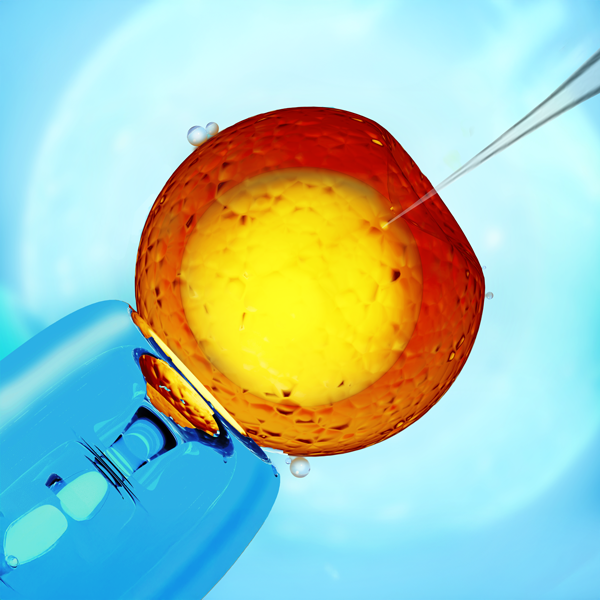
Microinjection is the process of transferring genetic materials into a living cell using glass micropipettes or metal microinjection needles. Glass micropipettes can be of various sizes with tip diameters ranging from 0.1 to 10 µm. DNA or RNA is injected directly into the cell’s nucleus. Microinjection has been successfully used with large frog eggs, mammalian cells, mammalian embryos, plants and tissues. Microinjection has been expensive, can be a slow process and requires skilled personnel, but new technologies are making it even more reliable, repeatable and affordable.
Pronuclear injection, inserting DNA or RNA into the nucleus of a fertilized oocyte to create transgenic organisms, lets researchers study the role of particular genes. This horizontal gene transfer can insert genetic material from the same species or a different one. When using genetic material from different species, a chimera is created. If the genetic material is NOT integrated into the genome of the offspring, it...more
- - August 20, 2019
Are you looking for a microliter or sub-microliter and high precision syringe that holds needles as small as 36 gauge (G), in addition to having the capability to connect to quartz tubing?
WPI’s NanoFil is the answer. We offer NanoFil syringes with NanoFil needles or the option to connect the NanoFil syringe to quartz tubing to use in research studies, mainly involving sub-microliter volume injections into animal tissues.
- - August 01, 2019
The new WPI MICRO-ePORE™ pinpoint cell penetrator is a simple and versatile system that can be used to facilitate microinjection of a diverse array of compounds and biomolecules into oocytes and pre-implantation stage mammalian embryos. Patent pending Flutter Electrode Technology assists in small, clean, precise membrane penetration without tearing or damaging the membrane. It results in substantially increased viability of embryos. In this quick video, Dr. Pelczar from the Center for Transgenic Models in Switzerland demonstrates the ease of cell penetration using the new MICRO-ePORE™.
Video footage courtesy of Dr. Pawel Pelczar, Head of CTM, University Basel, Switzerland, Center for Transgenic Models (CTM).
In this video UCLA graduate research student Fangtao Chi discusses the benefits of using the MICRO-ePORE™ for penetration of 2-cell stage embryos.
Video footage courtesy of Fangtao Chi, UCLA.
- - June 18, 2019
The new WPI MICRO-ePORE™ Pinpoint Cell Penetrator is a simple and versatile system that can be used for efficient microinjection of a diverse array of compounds and biomolecules into oocytes and pre-implantation stage mammalian embryos. Patent pending Flutter Electrode Technology assists in small, clean, precise membrane penetration without tearing or damaging the membrane. Here Gabe sets up the system and connects all the components.
Unpacking Your MICRO-ePORE™ System
Connecting Your MICRO-ePORE™ System
Connecting the MICRO-ePORE™ Electrode Holders
- - July 15, 2018
This 900A video series of 6 videos is designed to help familiarize you with the basic operation of the 900A Micropressure System. The 900A was designed for measuring pressures in kidney tubules, and it has many applications. It has recently been used for measuring ventricular blood pressure in larval fish. We suggest that you become familiar with the information in the instruction manual and the parts and techniques you need to operate the system effectively. Please read the manual and watch these videos prior to setting up and testing your 900A Micropressure System. Instrument Description
- The 900A Micropressure System is designed to measure pressures from –200 to +400 mmHg in small blood vessels, cells and other electrolyte-filled micro-cavities.
- The main components are the 900A include the Control Unit, the Pressure Pod and a Probe that connects to a glass microelectrode.
- The 900A utilizes an ion gradient at the tip of the microelectrode to set a null value of resistance in a...more
- - February 12, 2018
In this video you'll see how to replace the gasket in a Nanoliter2010.
If you have questions, contact us at 866.606.1974 (US Toll Free) or at wpi@wpiinc.com. To request a formal quote, please email us at quotes@wpiinc.com.
- - June 24, 2015Application kits are specially designed for eye research for injecting retinal pigment epithelium (RPE) and for intraocular (IO) injections. In addition, these kits may be used for brain injection in mice. They need to be used with a NanoFil syringe and UMPIII to achieve accurate, repetitive and oil-free injection in the submicroliter range.
Each kit includes two pieces of Silflex tubing (one for a spare), a holder assembly, spare gaskets, and an assortment of four tips - blunt for the RPE kit and beveled tips for the IO kit. Each kit comes with one each of 33, 34, 35 and 36 gauge tips so that first time users can find the best size for their application.
The Silflex tubing is the most critical component of the kit. This 35cm long, flexible tubing has a very precise outer diameter for airtight fitting with the syringe. It also has a small inner diameter for minimum dead volume, and is very durable when handled correctly. The SilFlex is coupled to the injection tip with a mechanism similar...more


Recent Posts



Close