Page 4 - Product Information
- - November 20, 2024
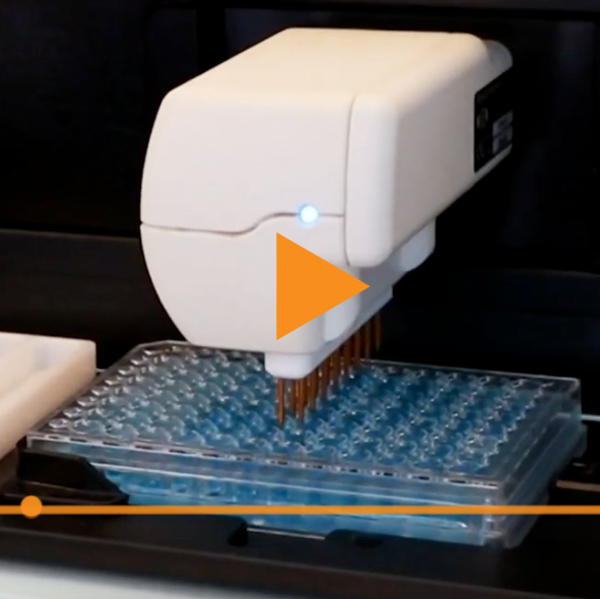
EVOM™ Auto is a high throughput screening autosampler for making TEER measurements in 24- and 96 well plates. A GxP software module is available as an option with ensure 21 CFR Part 11 Compliance to satisfy FDA requirements. In this video we will show how to stage the data files captured so that you can download them.
- - November 20, 2024
EVOM™ GxP compliance Module is 21 CFR Part 11 compliant software that meets the FDA's requirements for electronic records and signatures. It work with the EVOM™ Auto autosampler. In this video we launch the EVOM™ Auto GxP software from within EVOM™ Auto GxP Client.
- - October 02, 2024
Transepithelial electrical resistance (TEER) is a methodology that has been used for several decades to measure the resistance across a monolayer of cells to evaluate the barrier function of a cell layer. Historically, TEER measurements were utilized as a basic biological tool as researchers evaluated the permeability of biological layers and the functionality of tight junctions between various cell types. More recently, the utility of TEER measurements has expanded into new and diverse applications in a variety of fields. New applications for TEER measurement that have recently emerged include drug delivery, toxicology, organ-on-chip technology, and quality control of cell therapies. Traditionally used to study the barrier function of epithelial tissues in vitro, TEER has become a versatile and translational tool that has provided valuable insights into the integrity and permeability of complex engineered cell and tissue models as well as quality control measurements for cell-based products...more
- - September 26, 2024
See how WPI equipment is being used by researchers to advance organ on a chip (OOC) to improve the outcomes of pregnancies. WPI is working with Dr. Ramkumar Menon, director of UTMB Obstetrics and Gynecology’s Division of Basic Science and Translational Research, who is using Transepithelial Electrical Resistance (TEER) to explore ways to minimize pre-term births.
- - September 18, 2024
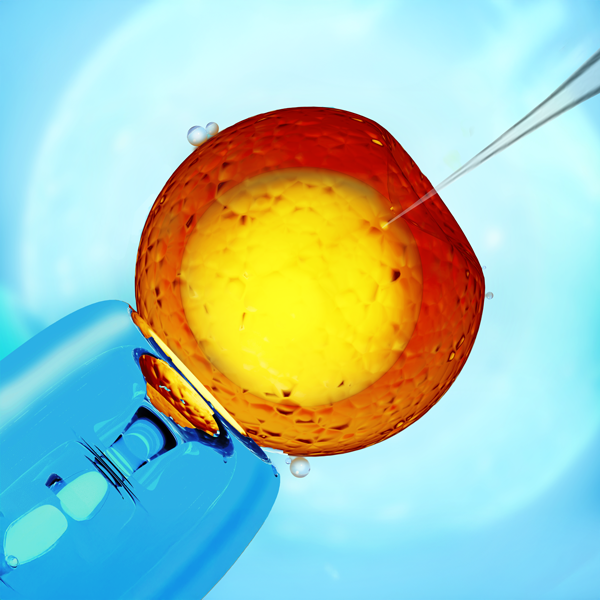
Pulling capillary glass into micropipettes or microelectrodes is a science and an art. Not only must you understand the environmental factors and the physics affecting each pull, but you must also know how to tweak your program to pull tips of consistent shape and size. Glass micropipettes or microelectrodes are used in intracellular recording, patch clamp, microperfusion, and microinjection. Let’s look at some factors that can affect the pulling of glass and how to adjust a program to get the micropipettes you need for your application.
- - September 10, 2024
Whether you are performing in-vivo injections for drug delivery calibrated extrusion studies, or any extremely sensitive, low-volume-based application, the quality and performance of your syringe system is paramount. Using a gas-tight syringe is critical for accuracy in various scientific and analytical applications for several reasons. Let’s consider a few instances.
- - August 19, 2024
In the industrial world, hazardous environments pose unique challenges that demand exceptional solutions. From oil refining to paint production, maintaining safety and accuracy in such settings is paramount. Nova Industrial Analytics rises to the occasion with Phoenix EX, offering advanced sensors and analytics designed to overcome these obstacles with unparalleled reliability and precision.
- - August 02, 2024
World Precision Instruments is the leading manufacture of benchtop TEER instrumentation including the original equipment manufacturer of Millipore Millicell® ERS-2 (Part number MERS00002) and Millipore Millicell® ERS (Part number MERS00001).
- - July 25, 2024
Synopsis: World Precision Instruments (WPI) has manufactured TEER instrumentation, including the EVOM2, EVOM3, EVOM™ Manual, and Millicell® ERS-2 (a WPI OEM product), for over 3 decades. Millipore’s Millicell® ERS 3.0 recently became available and is not manufactured by WPI, nor validated or certified to be accurate for TEER measurement. Users are cautioned to ensure their TEER measurements are taken using a WPI manufactured and validated product, like EVOM™ Manual, the proven gold standard for TEER measurement, to ensure accuracy and reproducibility.
- - July 16, 2024
Transepithelial/Endothelial Electrical Resistance (TEER) qualitatively measures cellular monolayer health and quantitatively evaluates cellular confluence by measuring the electrical resistance across a cell monolayer. It is commonly used to assess the integrity and permeability of cellular barriers, such as epithelial and endothelial cell layers in cell culture plates. Organ-on-Chip platforms are an emerging market for TEER applications. Let’s look at what TEER is and how it is used.
- - July 05, 2024
The EVOM™ Auto automates measurements of TEER in epithelial or endothelial monolayers cultured on 24-well or 96-well high throughput screening (HTS) plates utilizing our innovative EVOM technology, qualitatively measuring cell monolayer health and quantitatively measuring cellular confluence by reaching an increase or a plateau in tissue resistance. The autosampler has a 3-well rinse station for cleaning and stabilizing the electrodes. Now, sterile disposable rinse station inserts are available for your convenience. They fit over the 3-well base rinse station. You can simply throw out the disposable inserts with the solutions when you are changing plates. This short videos shows how easy they are to use.
- - July 04, 2024
The process of drug discovery and development is extremely slow and expensive. Regulatory authorities, such as US FDA need animal models to test absorption, distribution, metabolism, and excretion (ADME) which estimates safety and effectiveness of a drug.
- - June 18, 2024
Each NanoFil needle is individually handcrafted and made for versatility to serve your low-volume sample delivery needs. All needles are made with a universal 26G fixture to support and house each gauge of needle we offer: 33, 34, 35, and even 36G in blunt or beveled styles. WPI currently offers the smallest commercially available needles on the market—perfect for extremely sensitive targets, such as in ophthalmic applications. The universal fixture allows all needles to be used interchangeably across any NanoFil syringe. Any NanoFil needle can be inserted directly into the barrel of any NanoFil syringe, creating a 1:1 connection with the plunger, resulting in virtually zero dead volume. The sealing gasket seating the needle to the syringe reinforces a tight, uniform fit for a truly gas tight environment. Our design compatibility supports your ever-evolving application needs across varying delivery volumes required.
- - June 17, 2024
Get the highest quality images and video for your research with FluoroDish Cell Culture dishes. Their optical quality glass bottom is as thin as a coverslip, which ensures the least amount of distortions and excellent heat transfer without any of the autofluoresence issues so common with plastic petri dishes.
Choose the style that suits your application. For live cell imaging, embryo research, and life science researchers working with small sample volumes, the 35mm Fluorodish petri dish with a 10mm well (FD3510) is ideal. Researchers working with expensive chemicals or experimental drugs choose the FD3510. They are also an excellent choice for microinjection applications, because they are designed with the lowest access angle for easier insertion of a micropipette during cellular microinjection. Fluorodishes are also available in 35mm (FD35) or 50mm (FD5040) sizes for cell culturing applications. For better adhesion of neurons, try the 35mm Fluorodish that is coated with poly-D-lysine...more
- - June 05, 2024
Transepithelial Electrical Resistance (TEER) measurements play a vital role in assessing barrier function, tissue integrity, and cell-cell interactions in Organ-on-Chip (OoC) platforms. Measuring TEER by applying a small AC current across a monolayer of cells and measuring the resistance to that current, which provides valuable insights into the physiological relevance and functionality of in vitro models, enabling researchers to study organ-specific responses, disease mechanisms, and drug effects while cells are growing in a controlled microenvironment. This article will explore the applications of TEER in OoC set-ups, critical aspects to TEER measurements in microphysiological systems, and challenges and limitations that must be overcome to fully realize the potential of this technology for OoC platforms.

Recent Posts