Page 16 - Blog
- - June 27, 2023
In 2022, the United States Food and Drug Administration (FDA) approved 37 new drugs, of which 20 were chemical entities and 17 were biologics. In 2023, drug discovery remains strong with many new advancements a result of changing landscapes in both the types of drugs that are being developed and the new and innovative assay that are being launched to evaluate drugs preclinically. Therapeutic development is still highly focused on diseases that affect large populations of people for which there are lack of effective treatments, with 2023’s most anticipated drug launches expected to be in areas of cancer, Alzheimer’s disease, cardiovascular disease, and ulcerative colitis.
- - June 22, 2023
Hemostatic forceps, hemostats, are used primarily to control bleeding during surgical procedures, and they are also used for a variety of other applications. Most hemostatic forceps have ring handles and a ratchet-style, locking mechanism to adjust the tension on the forceps and to keep the jaws clamped in place, maintaining constant pressure on the tissue or blood vessel being occluded. They also have jaws with interlocking serrations or teeth for a secure grip on tissues. The tips of hemostats are often narrow and delicate, allowing for precise manipulation of tissues and vessels. They vary in size, tip shape, type of metal, and function. Here are some applications for which hemostatic forceps are uniquely designed.
- - June 09, 2023
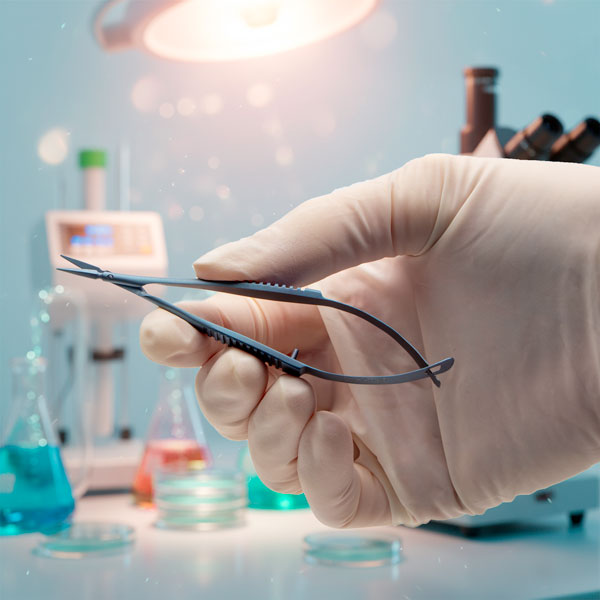
One of the most common surgical instruments in a laboratory is lab forceps or tweezers. Thumb forceps used in a lab come in various lengths, and the tips can be straight, curved, angled, or angled on the side. They can be made of stainless steel, German steel, Dumoxel, Dumastar, or titanium. They can have smooth tips, serrated tips, or teeth. They are even available with tungsten carbide inserts. Each style has its own purpose.
In general, however, lab forceps are used to handle and transfer small objects, such as samples, solid materials, or delicate components. The fine tips of forceps allow for precise manipulation and control. For now, here's a quick rundown of some of the popular applications for lab forceps in various types of labs.
- - June 06, 2023
This article shows you how to appropriately care for your surgical insturments to ensure long lasting, highly functioning tools for your application.
- - May 31, 2023
In a life science laboratory, quality surgical scissors are indispensable for dissection, suturing, small animal surgeries, tissue preparation, and more. The variety of surgical scissors can be overwhelming. To help you choose which surgical scissors are right for your application, let’s look at some of our most popular ring handled surgical scissors and their intended uses.
- - May 25, 2023
If the EVOM™ Auto software switches from Resistance to TEER mode while you are selecting menu options, here's a quick tip:
Be careful when selecting Resistance mode, do not tap the background window and do not click on the side arrows.
Tapping the background window will switch you to TEER mode.
Instead, tap an option on the forefront square window to stay in Resistance mode.
- - May 16, 2023
Surgical forceps or surgical tweezers are common surgical instruments, but there's a large variety of tweezers to choose from. In general forceps can be grouped as thumb forceps (frequently called surgical tweezers, gripping forceps, non-locking forceps or pinning forceps) or ring forceps (also called hemostats, hemostatic forceps and locking forceps). Thumb forceps are spring forceps used by compression between your thumb and forefinger and are used for grasping, holding or manipulating tissue or objects. They are non-ratchet style. Hemostatic forceps are hinged forceps that look more like scissors with ring handles. Focusing on thumb forceps, they can be further categorized as tissue forceps and dressing forceps. Let's explore the differences between tissue forceps and dressing forceps for surgical applications and research laboratories.
Tissue Forceps
Tissue forceps are used to hold and manipulate delicate tissues during surgical procedures or laboratory work. They have a fine tip...more
- - May 02, 2023
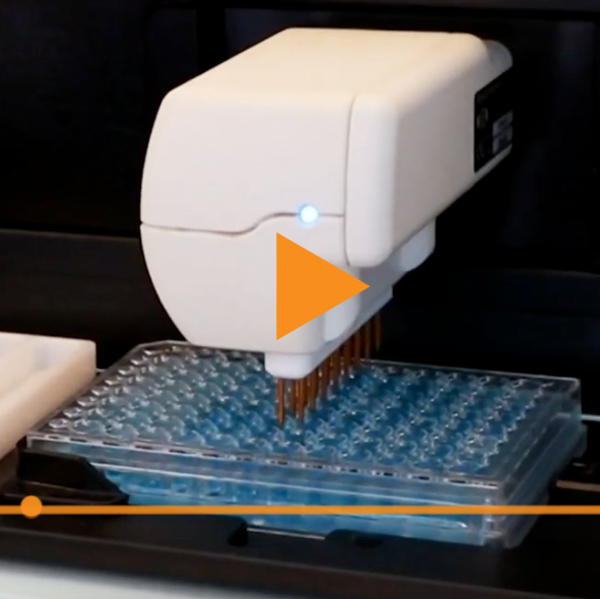
The EVOM™ Auto automates measurements of TEER in epithelial or endothelial monolayers cultured on high throughput screening 96-well plates utilizing our innovative EVOM™ technology, qualitatively measuring cell monolayer health and quantitatively measuring cell confluence by determining an increase or a plateau in tissue resistance.
The video below shows details the features and functions of the Experiment window on the EVOM™ Auto:
- - May 01, 2023
Improved User Experience
EVOM™ Auto is the latest generation of WPI’s automated transepithelial or transendothelial electrical resistance (TEER) measurement system. Using the same proven technology in the EVOM™ Manual and REMS, combined with a new multi-electrode array, software interface and control system, it delivers our fastest workflow solution while improving TEER measurement accuracy: - Faster throughput – read a 96-well plate in under 3.5 minutes (A 2-rinse cycle can be completed in 7 minutes, almost halving the time compared to a REMS)
- Automatic sample averaging improves accuracy and stability
- Compact size for easy set up and operation inside in a hood or incubator
- Wireless control of the autosampler
- Smart user interface and web browser-based software for easy sample analysis and data storage and access
- Wider resistance range compared to the REMS – upper range increased from 20 kΩ to 100 kΩ
- Continuous data recording capability at user-defined time intervals
EVOM™ Auto, with advanced...more
- - April 27, 2023
The EVOM™ Auto automates measurements of TEER in epithelial or endothelial monolayers cultured on high throughput screening 96-well plates utilizing our innovative EVOM™ technology, qualitatively measuring cell monolayer health and quantitatively measuring cell confluence by determining an increase or a plateau in tissue resistance.
The video below shows you how to schedule an operation on the EVOM™ Auto:

Recent Posts