Page 8 - Blog
- - November 26, 2024
When your transepithelial electrical resistance (TEER) measurement processes require 21 CFR Part 11 compliance to satisfy FDA requirements, WPI’s GxP module for use with the EVOM™ Auto is perfect. Powered by TotalLab, the software database ensured that your EVOM™ Auto TEER data is tracked and stored with appropriate electronic signatures and an extensive audit trail. EVOM™ Auto can be used to perform automated TEER measurement on both 24- and 96-well plates. In this video you can see how to prepare your data for downloading.
- - November 26, 2024
WPI’s EVOM™ line of transepithelial electrical resistance (TEER) measurement systems is the industry standard with thousands of citations in peer-reviewed journals spanning over 40 years. Our newest automated TEER measurement unit, the EVOM™ Auto, works with both 24- and 96-well plates, and now it is available with an optional GxP module to ensure 21 CFR Part 11 compliance to satisfy FDA requirements. In this video you can see how to run, pause, and stop an experiment.
- - November 26, 2024
EVOM™ Auto GxP Module is an add-on for the EVOM™ Auto Automated TEER measurement system that ensure 21 CFR Part 11 compliance to satisfy FDA requirements. The EVOM™ Auto is used for making transepithelial electrical resistance (TEER) measurements when you are testing for cell confluency or barrier integrity when you are doing drug absorption studies, tissue engineering, disease model, QC of cell-based assays and more. In this video we will create a sequence to use with an EVOM™ Auto that has the GxP module.
- - November 20, 2024
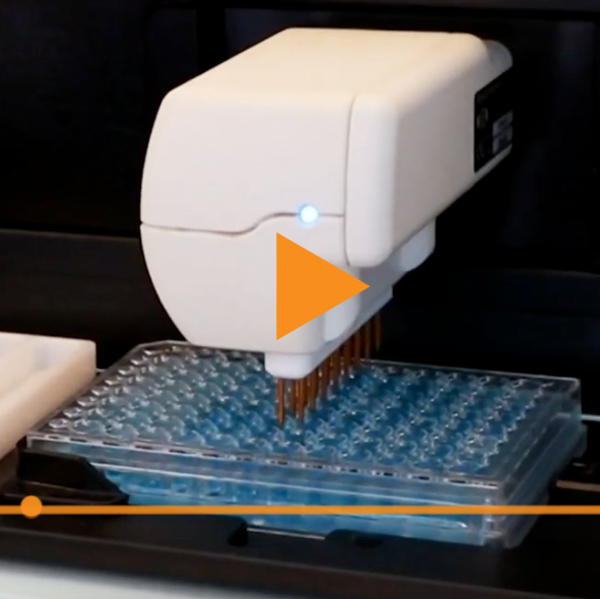
EVOM™ Auto is a high throughput screening autosampler for making TEER measurements in 24- and 96 well plates. A GxP software module is available as an option with ensure 21 CFR Part 11 Compliance to satisfy FDA requirements. In this video we will show how to stage the data files captured so that you can download them.
- - November 20, 2024
EVOM™ GxP compliance Module is 21 CFR Part 11 compliant software that meets the FDA's requirements for electronic records and signatures. It work with the EVOM™ Auto autosampler. In this video we launch the EVOM™ Auto GxP software from within EVOM™ Auto GxP Client.
- - October 14, 2024
SARASOTA, Fla. and PARIS, France, October 14, 2024 -- World Precision Instruments (WPI), a leading provider of high-quality laboratory instruments and equipment for basic research and drug development, and ELVESYS, a leading microfluidic instrument manufacturer specializing in flow control and microfabrication, are excited to announce a global commercial partnership for the distribution of the ELVEFLOW family of products. This distribution partnership aims to broaden WPI's offering in fluidics, continuing to position WPI at the forefront of developing technologies that enable and augment microphysiological systems and organs-on-chip applications. With a strong focus on enabling TEER, fluidics, and other vital technologies in this field, WPI is committed to advancing research and innovation in the life sciences for basic research and drug development.
- - October 02, 2024
Transepithelial electrical resistance (TEER) is a methodology that has been used for several decades to measure the resistance across a monolayer of cells to evaluate the barrier function of a cell layer. Historically, TEER measurements were utilized as a basic biological tool as researchers evaluated the permeability of biological layers and the functionality of tight junctions between various cell types. More recently, the utility of TEER measurements has expanded into new and diverse applications in a variety of fields. New applications for TEER measurement that have recently emerged include drug delivery, toxicology, organ-on-chip technology, and quality control of cell therapies. Traditionally used to study the barrier function of epithelial tissues in vitro, TEER has become a versatile and translational tool that has provided valuable insights into the integrity and permeability of complex engineered cell and tissue models as well as quality control measurements for cell-based products...more
- - September 30, 2024
A new study by Altis Biosystems (Durham, NC) using the EVOM™ Auto is undergoing a peer review prior to publication. It addresses the challenge of predicting gastrointestinal toxicities (GITs) in drug development, which are common adverse events in clinical trials. Traditional animal models fail to accurately replicate human GI physiology, leading to late detection of GITs. Researchers Colleen Pike and James Levi (with their team) developed a high-throughput assay, a 2D human intestinal stem cell-derived model, which assesses cell proliferation, cell abundance, and barrier function to predict clinical diarrhea risk.
- - September 26, 2024
See how WPI equipment is being used by researchers to advance organ on a chip (OOC) to improve the outcomes of pregnancies. WPI is working with Dr. Ramkumar Menon, director of UTMB Obstetrics and Gynecology’s Division of Basic Science and Translational Research, who is using Transepithelial Electrical Resistance (TEER) to explore ways to minimize pre-term births.
- - September 18, 2024
Pulling capillary glass into micropipettes or microelectrodes is a science and an art. Not only must you understand the environmental factors and the physics affecting each pull, but you must also know how to tweak your program to pull tips of consistent shape and size. Glass micropipettes or microelectrodes are used in intracellular recording, patch clamp, microperfusion, and microinjection. Let’s look at some factors that can affect the pulling of glass and how to adjust a program to get the micropipettes you need for your application.

Recent Posts