

Page 16 - Product Information
- - October 19, 2015
LabTrax 8/16 hardware combined with MDAC software is an excellent choice for WPI's SI-H line of muscle physiology products like the SI-MT Muscle Platform, SI-CTS Cell Tester and SI-HTB Horizontal Tissue Baths. This data acquisition system is ideal for testing physiological characteristics like the contractile and elastic properties of different tissues in various conditions like isometric, anisometric or isotonic states. This data acquisition system was designed with the muscle researcher in mind, because the knowledge of physiological characteristics of muscles is critical when quantifying the beneficial or adverse effects of a stimulus (like a pharmaceutical drug) on muscle function in pre-clinical studies.
Up to 8 Channels with Independent Control
LabTrax 8/16 is a powerful low noise and high resolution data acquisition system, allowing up to 8 ADC channels and 4 DAC channels synchronously for user-defined muscle length and electrical stimulation protocols. It includes a number...more
- - October 03, 2015
The type of pump you choose for your fluid handling will largely depend on your laboratory application. In this article, we will compare the popular pump types.
Microinjectors
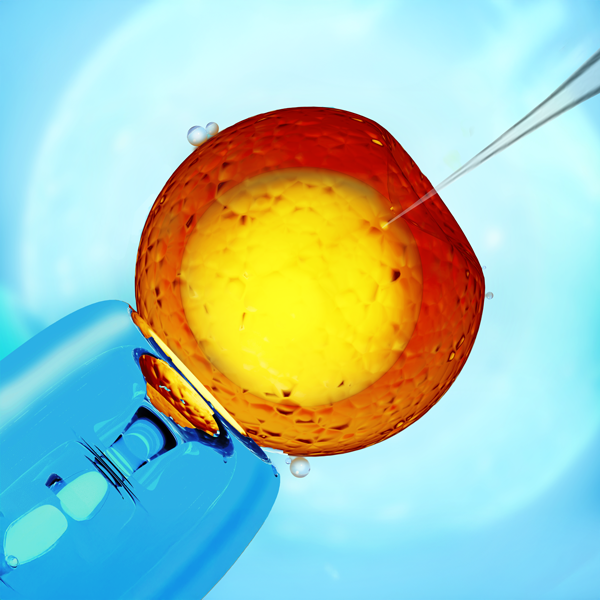
WPI Microinjectors use carefully regulated air pressure for injecting cells with fluid. Injected volumes range from picoliters to nanoliters. The port supplies positive pressure for high-pressure ejection. The pressure port maintains a low positive “compensation” pressure to the injecting pipette between injection pulses to prevent fluid uptake through capillary action.
Timing, injection pressure and compensation pressure are adjusted independently using the touch screen interface. Time intervals can range from 2 seconds down to 10 ms or less, depending on the injection pressure setting. The injection pressure interval is triggered by using a foot switch or a computer-controlled TTL pulse.
The WPI Microinjectors are designed to inject very small quantities of fluids, such as drugs, into cells or small...more
- - June 24, 2015Application kits are specially designed for eye research for injecting retinal pigment epithelium (RPE) and for intraocular (IO) injections. In addition, these kits may be used for brain injection in mice. They need to be used with a NanoFil syringe and UMPIII to achieve accurate, repetitive and oil-free injection in the submicroliter range.
Each kit includes two pieces of Silflex tubing (one for a spare), a holder assembly, spare gaskets, and an assortment of four tips - blunt for the RPE kit and beveled tips for the IO kit. Each kit comes with one each of 33, 34, 35 and 36 gauge tips so that first time users can find the best size for their application.
The Silflex tubing is the most critical component of the kit. This 35cm long, flexible tubing has a very precise outer diameter for airtight fitting with the syringe. It also has a small inner diameter for minimum dead volume, and is very durable when handled correctly. The SilFlex is coupled to the injection tip with a mechanism similar...more
- June 18, 2015The proper care and handling of your valuable surgical instruments will improve their longevity and function. Choose a protocol appropriate for your environment from the cleaning techniques below. See the videos here.
RINSING
Immediately after use, rinse instruments under warm or cool running water to remove all blood, body fluids and tissue. Dried soils may damage the instrument surface and make cleaning very difficult. Do not use hot water as this will coagulate proteinous substances.
CLEANING TECHNIQUES
Time, temperature, and agitation play important roles in the cleaning process.
Time — the efficiency of cleaning chemicals is often time dependant
Temperature — higher temperature cleaning solutions result in better cleaning
Agitation — whether manual or ultrasonic, it is helpful in loosening the soil on the surface of the instrument
Ultrasonic Cleaning
Ultrasonic is the most effective cleaning method. Ultrasonic cleaning is the result of cavitation. Vibrating sound waves create micron-size...more
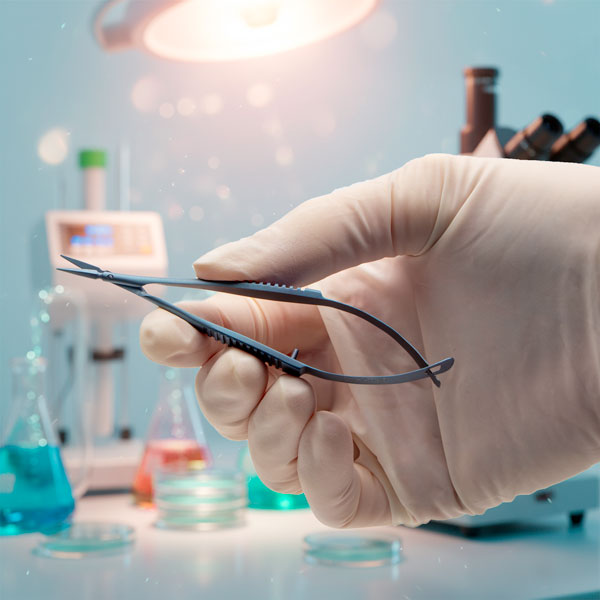
- June 18, 2015Surgical instruments for dissecting come in a variety of patterns, types, shapes and sizes. Choosing the correct one for your application will improve outcome and reduce the frustration of trying to use an inappropriate tool.
Choosing a Set of Forceps
Ceramic Forceps
Ceramic contains no metal. So, ceramic forceps will not leave any trace metal residue on tissue. This is especially useful in forensic science research. Ceramic is not electrically conductive, so it can be used for handling gels in an electrophoresis bath. Ceramic's corrosion resistance allows its use in highly corrosive solutions. For example, it could be used to clean quartz cover glass or lithographic produced chip sensors in an acid solution without damaging the forceps. Ceramic's low heat conductivity and high heat resistance allow it to hold parts in a flame for sterilizing or fabricating. Although the flame with eventually reduce the strength of the ceramic tip, it will be minimal.
Titanium...more
- June 11, 2015First, let's consider volumes. - A milliliter (mL) is one thousandth the volume of a liter (L) or 10-3L
- A microliter (µL) is one thousandth the volume of a mL (10-6L)
- A nanoliter (nL) is one thousandth the volume of a µL (10-9L)
- A picoliter (pL) is one thousandth the volume of a nL (10-12L)
This is graphically represented at the right. Notice that the mL is one trillion times larger than the picoliter. The table (right) shows that the side of a cube with a volume of 1mL is 1cm long. Likewise, the side of a cube with a volume of 1pL is 10µm long. Just for comparison, it shows that the diameter of a sphere with a volume of 1mL is 1.24cm, and the volume of a sphere with a volume of 1pL is 12.4µm.
With these volume comparisons in mind, lets consider some of the available options for microinjection pumps.
...moreRANGE PUMPS APPLICATIONS Milliliter Range 10-3L Syringe Pumps
Peristaltic PumpsGeneral pumping applications Microliter 10-6L UMP3 Tissue/organ/body injection
MicroperfusionNanoliter - May 13, 2015Surgery in the Middle Ages
It’s hard to imagine that surgery wasn’t always the prestigious profession it is today. But, in medieval Europe, physicians didn’t practice surgery, because such things were handled by lesser men… or even by women. Often, the local barber took care of minor surgeries. He would travel from town to town, and you could stop in to get a haircut and shave, and at the same time get a tooth pulled or have a minor surgery.
In the 1500s, women were prohibited from becoming physicians but were allowed to practice surgery. It was an occupation they learned by apprenticeship, and they often used it to serve the poor. During the 1700s, as the profession advanced and higher learning was required, women were barred from practicing surgery, because they were also excluded from universities where the skills were taught. Thankfully, the world has changed!
Modern Medicine
Life science research through the centuries has led us to this age of modern medicine that we enjoy. Many brilliant...more
- March 05, 2015World Precision Instruments' PUL-1000 is a microprocessor controlled, four-stage, horizontal puller for making glass micropipettes or microelectrodes used in intracellular recording, microperfusion and microinjection. It offers programmable sequences of up to four steps with complete control over the heating, force, movement and cooling time. This allows graduated cycles for a variety of applications. PUL-1000 can produce pipettes with tip diameters from less than 0.1µm to 10+ µm.
- February 01, 2015Here are some frequently asked questions (FAQ) about TEER measurement using an EVOM2.
- December 07, 2014A calibrated BLPR2 on the LabTrax24T was used to record the results. This is a plot of both pumps on the #14 tubing at 50 RPM into a 22 gauge needle. The flow is estimated to be 9 ml/min at 50RPM.
- November 10, 2014The EVOM2 is the classic, hand-held instrument for making Trans Epithelial Electrical Resistance (TEER) measurements. The REMS system adds a robot and data recording for automated TEER measurements. There may be times when you don't have a robot, but would still like to have the data recording capabilities of the REMS system. With a little ingenuity, you can do just that. Here, we will show you how you can add data recording to your standard EVOM2.
- October 20, 2014A low-noise amplifier like the DAM50 is an excellent choice for EEG recording in rodents. WPI's amplifiers were engineered for the bio-medical researcher. While 20-30μV of noise is common in bio-amplifiers, WPI’s DAM series amplifiers generate 0.4μV RMS (root mean squared) at 0.1-100Hz. (That’s equal to about 2μV peak to peak.) This setup shows one way such recordings could be made. The RC1 electrode works well for rats, and the EP1 is more suitable for mouse cranial application.
For this application, you will need the following equipment:
- (1) DAM50 amplifier
- (1) MD4R micromanipulator
- (2) M3301EH electrode holders
- (2) Profile A single tungsten metal electrodes
- (1) M10 stand
- (1) 5052 steel base plate
- (1) 5470 cable
- (1) electrode (RC1 or EP1)
Rat Cranial Applications
- October 09, 2014World Precision Instruments chemist Nikki Scafa demonstrates how to calibrate your ISO-OXY-2 or OXELP oxygen sensor with the TBR4100 free radical analyzer. For more information on biosensors, see www.wpiinc.com/biosensors.
- August 04, 2014Micro4™ from World Precision Instruments is an easy-to-use but very capable controller for WPI's Nanoliter Injector and UMP3 UltraMicropPump.
- July 20, 2014WPI's Nanoliter 2010 Microinjection Pump is ideal for many applications, including zebrafish, xenopus oocytes and drosophila. MICRO4, an optional microprocessor-based controller, can provide an "intelligent" and easy-to-use interface to up to four Nanoliter Injectors. Operating parameters are set with the membrane key-pad and LCD display.


Recent Posts



Close