Page 18 - Product Information
- - May 01, 2013
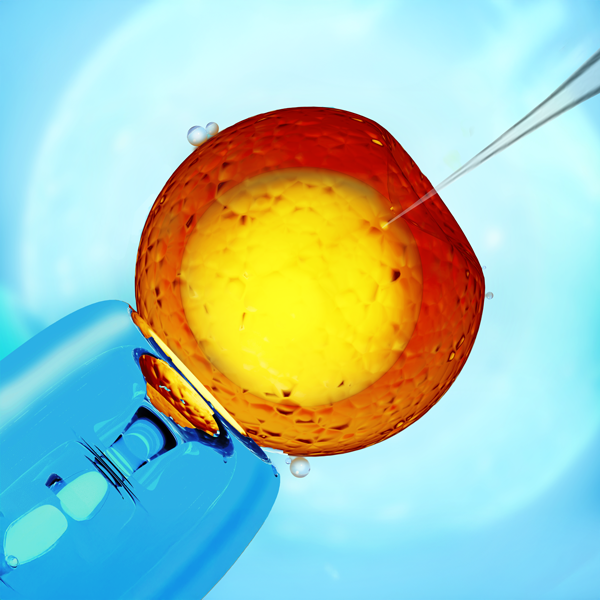
Microinjection uses either a metal needle or a glass micropipette to inject small liquid volumes. For example, genetic material may be inserted into a living cell, a drug introduced into an eye or brain, or fluid injected into a muscle. Typically, microinjection is performed under a microscope. A stereotaxic setup may be required. WPI offers a variety of pumps along with special syringes, stereotaxic frames, glass capillaries and needles. Here we will highlight our microinjection pumps. The setup you choose depends on the size of injection aliquots, the volume to be injected and the size of needle or glass tip chosen. The products described below are listed in order by the smallest volume they can inject. See the comparison chart below or the related post links at the bottom.
Pressure Injectors
WPI's new generation of pressure microinjectors are quickly replacing the very popular legacy line of pnuematic valve PicoPumps Pressure Injectors. The three new injectors facilitate any type of...more
- - April 30, 2013
Surgical Loupes help to alleviate eye strain by enlarging the image when you are working on tiny subjects or conducting precision operations. They are portable and easier to use than a surgical microscope. However, they are not created equal, and choosing the pair that's right for you is important to your satisfaction.
Factors Involved in Choosing Loupes
Choosing the correct surgical loupes for your application involves several factors, including resolution, working distance, field of view, depth of field, magnific
ation , weight and interpupillary distance. These terms are defined below.Ideally, you want the lowest magnification that is suitable for your application. As a general rule, the lower the magnification, the greater the depth of field and field of vision. Likewise, the longer the working distance, the greater the field of view. The larger your field of view, the less you need to turn your head. This reduces eye strain and fatigue. It is also important...more
- - April 30, 2013
The barbed tubing assortment kit contains over 250 items. All the items are pictured on a grid below. The darker lines in the image grid represent centimeters, and the smaller ones are 2.5 mm apart.
...moreLuer to Tubing Coupler Assortment Kit P/N 504955 (Nylon)
1/16" Barbed Male Luer w/ Locking Nut, Qty: 10 3/32" Barbed Male Luer w/ Locking Nut, Qty: 10 1/8" Barbed Male Luer w/ Locking Nut, Qty: 10 1/16" Barbed Male Slip Luer, Qty: 10 3/32" Barbed Male Slip Luer, Qty: 10 1/8" Barbed Male Slip Luer, Qty: 10 1/16" Female Luer for Bulkhead Mounting 1/4" - 28, Qty: 10 3/32" Female Luer for Bulkhead Mounting 1/4" - 28, Qty: 10 1/8" Female Luer for Bulkhead Mounting 1/4" - 28, Qty: 10 Female Luer Connector w/ Full Luer Threads, Qty: 10 Female Luer Tee w/ Full Luer Threads, Qty: 10 10-32 UNF Threaded Port Male Slip Luer, Qty: 10 1/4-28 UNF Threaded Port Male Slip Luer, Qty: 10 10-32 UNF Threaded Port Female Luer, Qty: 10 1/4-28 UNF Threaded Port Female Luer, Qty: 10 1/16" Barbed Female Luer - - April 30, 2013
Profile B Microelectrodes
These electrodes are sold in packages of 10.
Tungsten Profile B Comparison Chart, 76 mm long, 0.216 mm shaft
Order code Length Insulation
ThicknessShaft
DiameterNominal
Impedance
±20%Tip
DiameterTypical Use TST33C05KT 76mm 3µm 0.216 mm 0.5 MΩ 1µ Stereotrode / Bipolar, differential measurements - extra fine TST33C10KT-B 76mm 3µm 0.216 mm 1.0 MΩ 1µ Stereotrode / Bipolar, differential measurements - extra fine. Blunt tip. TST33C10KTH 76mm 3µm 0.216 mm 1.0 MΩ 1µ Stereotrode / Bipolar, differential measurements - extra fine. Heat treated. TST33C20KT 76mm 3µm 0.216 mm 2.0 MΩ 1µ Stereotrode / Bipolar, differential measurements - extra fine Tungsten Profile B Comparison Chart, 76 mm long, 0.356 mm shaft
...moreOrder code Length Insulation
ThicknessShaft
DiameterNominal
Impedance
±20%Tip
DiameterTypical Use TST33A001KT 76mm 3µm 0.356 mm 0.01 MΩ 1µ Stereotrode / Bipolar, differential measurements TST33A05KT 76mm 3µm 0.356 mm 0.5 MΩ 1µ Stereotrode - - April 30, 2013LabScribe is the powerful software included with Lab-Trax™ (formerly called DataTrax). The acquisition and data display in LabScribe is easy and straight forward. It supports real units and a time-based display that is not coupled to sample rate. You can display up to 1,000,000 data points per channel on the screen. Scrolling, zoom-in and zoom-out tools, together with a searchable list of user interventions, make finding important areas of data easy. And, of course, you can print or export anything that you see.
The Main Display
Data recorded with LabScribe is presented as distance-per-unit of time (for example, cm/sec) exactly as it would be on a traditional paper chart recorder. The x-axis display is compressed or expanded using point and click icons in the LabScribe toolbar. LabScribe ’s display can smoothly scroll data at any speed. The display scroll rate is not determined by sampling rate, so you have full control over resolution and display. This is particularly useful when you want...more
- - April 30, 2013
...moreOrder code Description DMF1000 Description: Complete Microforge System; includes Programmable Digital Controller and Microscope Application: Fabrication of special shapes of glass micropipettes. For example, pressure polishing of patch clamp pipettes and making of holding pipettes. Unique for pipette tip calibration and microinjection pipettes. Features: Most sophisticated and only microforge on the market with built-in pressure polishing capability. Programmable controller with 10 user-selectable memory storage (of heat and time) for reproducibility. MF200 Description: Complete Microforge System, with analog controller Application:Use to fire polish glass micropipettes and prepare special shapes Features: Comes with W30S Microscope, a 40x objective and three filament sizes. Uses exclusive Kohler illuminator instead of industry standard frosted glass illuminator for less glare and sharper image. OMEGA-Z Description: Omega-Tip-Z with Probe and Holder Application: Measures impedance - - April 30, 2013
Stretch receptors are specialized fibers that are in parallel to the fibers in muscle. The receptors stretch as the muscle is lengthened, and they generate action potentials. The frequency of these action potentials is proportional to the length of muscle stretch and the position of the muscle. Through sensory nerve fibers from the stretch receptors, the action potentials and their frequency provide feedback to the central nervous system that will modulate reflex responses and motor control of the muscle.
Setup
For these studies, the whole muscle and the nerve that innervates it are isolated from the organism. A muscle and its nerve, like the Soleus, is isolated and placed in the cuvette of an SI-MT or SI-HTB muscle research system. The muscle is positioned so that the myoneural junction (the place where the nerve innervates the muscle) is on the top side of the muscle. The ends of the muscle are attached to a transducer and a motor through the tissue holders, and the end of the nerve...more
- - April 30, 2013
Abstract
Concentrations of DNA in solution (31µg/mL and 688µg/mL) were measured with a spectrometer and UV/VIS light source in a DIPUV-Mini. Due to the 2mm pathlength, use of a DIPUV-Mini does not require a pre-measurement dilution within this concentration range, thus a potential source of error was eliminated.
Experimental Procedure
Standard solutions of DNA (Sigma D1626) were prepared gravimetrically using 18.2MΩ/cm ultrapurified water as a solvent. Solutions were prepared between 0.0µg/mL and 687.6µg/mL.
Measurements were taken in triplicate using a DIPUV-Mini. The DIPUV-Mini was connected to a UV/VIS light source (WPI #D4H).
Data were collected in 1nm increments across the full range of the instrument (190nm-720nm). The instrument was configured such that reference measurements yielded an 80% total intensity. All measurements utilized 18.2MΩ/cm ultrapurified water as a reference solution.Results
Experimental results are presented in Table 1:
...moreDNA [µg/mL] Absorbance @260nm - - April 30, 2013
Abstract
Concentrations of DNA in solution (31µg/mL and 561µg/mL) were measured with a spectrometer and UV/Vis light source in a cuvette. A 2mm pathlength
cuvette does not require a pre-measurement dilution within this concentration range, thus a potential source of error was eliminated. Although a 2mm cuvette has a total internal volume of 0.7mL, only 350µL is required to obtain an accurate measurement. Experimental Procedure
Standard solutions of DNA (Sigma D1626) were prepared gravimetrically using 18.2MΩ/cm ultrapurified water as a solvent. Solutions were prepared between 0.0µg/mL and 561.1µg/mL.
Measurements were taken in triplicate using a 2mm cuvette (WPI #CUV2102-1) in a standard cuvette holder. An appropriate cuvette spacer (WPI #89342)allowed for consistent placement of the cuvette within the holder. The cuvette holder was attached via two 500µm SMA-terminated fiber optic cables to a UV/Vis light source (WPI #D4H).
Data were collected in 1nm increments across the full...more
- - April 30, 2013
Cuvettes come in a variety of shapes and sizes, but one of the most important specifications of a cuvette is its Z-dimension. The Z-dimension of an instrument (cuvette holder or spectrometer) is the distance from the bottom of the cuvette chamber floor to the center of its light beam (see image). A cuvette’s Z-dimension must match the Z-dimension of the instrument with which it will be used. Each manufacturer designs its instruments with a specific Z-dimension. Common Z-dimensions include 8.5 and 15mm, and sometimes 20mm. When purchasing small volume cuvettes, the correct Z-dimension becomes critical. Matching the Z-dimension of the cuvette to the Z-dimension of the instrument ensures that the light beam passes through the center of small samples.The table below shows the standard Z-dimension of the spectrometer sample compartments for many manufacturers.
...moreMANUFACTURER
Z-DIMENSION Agilent® 15 mm Avantes® 15 mm Beckman® 8.5 mm Bio-Rad® 8.5 mm Cecil® 15 mm Eppendorf® 8.5 - - April 30, 2013
The Nanoliter injector is a micro-processor controlled injection system that uses direct piston displacement. The collet assembly (exploded view) is shown in the image below. The glass pipette fits into the white, plastic sleeve (spacer). When the collet is screwed in place securely, the black rubber washers are compressed and hold the glass firmly in place.
Nanoliter 2000
A side view of the assembled Nanoliter injector is shown below.
Nanoliter 2010
As the plunger is depressed, it pushes into the glass to expel the liquid in the pipette. Eventually, the diameter of the plunger matches that of the glass, and the plunger cannot expel any more liquid. If the plunger continues to press on the tip of the pipette, the pipette could crack or become dislodged from the plastic sleeve (spacer) inside the collet assembly. If that happens, the Nanoliter will begin to leak.
- - April 29, 2013
Suction electrodes are used with muscle research systems to record the action potentials from the stretch receptors at the same time that the length and tension of the muscle are recorded.
Materials
- soldering iron with solder
- wire strippers
- wooden-handled dissecting pin
- alcohol burner
- can or tube of contact or plastic cement
- fine flat file
- emery cloth
- electrical tape
- popsicle stick
- two pieces of chlorided silver wire (0.005” dia, 5” long)
(See Chloriding Silver Wire.) - three feet of shielded, two-conductor, insulated cable
- three color-codedconnectors that will mate to the connectors on the input cable for the amplifier
- three feet of flexible plastic tubing (20 gauge Tygon or PE 100)
- 18-gauge needle
- 3-way stop cock
- 3cc syringe
- 1cc tuberculin syringe
- glass micropipette tip
Procedure
- The connectors and electrodes need to be attached to the ends of the shielded, two-conductor cable. Take one end of the cable and carefully strip 5 inches of insulation off the end.
NOTE: Minimize the number...more
- - April 29, 2013
An amplifier, in simplest terms, is an electronic device that magnifies an input signal. However, the way an amplifier is designed to handle noise and bandwidth limitations greatly affects the quality and sustainability of the final output signal.
Defining Terms
To knowledgeably discuss amplifiers, let’s define a few terms.
- Gain – The gain is the multiplier defining how much the amplitude of an input signal is increased. A signal with an X1 gain is not amplified. An X10 gain produces an output signal ten times greater than the input signal.
- Noise – Any unwanted signal fluctuations are called noise. While noise can also result from external sources, for the purpose of this discussion, we are primarily concerned with the noise resulting from the inner workings of the electronic device, our amplifier. This intrinsic noise is called shot (or schott) noise.
- Signal to Noise Ratio (SNR) – The ratio of the output signal to the noise of the amplifier is called the signal to noise ratio. The smaller...more
- - April 29, 2013
Use the table below to compare WPI and Bovie part numbers.
...moreOrder code Bovie P/N Description 500384 AB03 Micro Bur Handle, 1225 rpm 500385 AB04 Micro Burr Handle, 1225 rpm 500386 AB01 Burr Tip, 1Mm Dia., 10/Box 500387 AB05 Burr Tip, 0.5Mm Dia., 10/Box 500388 AA11 Cautery, Adj. High Temp, 10/Bx 500389 HIT1 Cautery, High Temp, 2200ºF 500390 HIT0 Cautery, Low Temp 500391 DEL0 Cautery, Low Temp Kit 500392 DEL1 Cautery, High Temp Kit 500393 H103 Loop Tips, Disposable Hi Temp 500394 H101 Fine Tips, Disposable Hi Temp 500395 H104 Elongated Tips, Low Temp, 500396 H100 Fine Tips, Disposable Low Temp 500421 A1250 Electrosurgical Generator 501001 A1252C Connecting Cord, Reusable 501005 A820 Bipolar Forcep, Bayonet 7.5" 501009 A824 Forceps,Bipolar 4.5", Cvd,Fine 501010 A825 Forceps, Bipolar, 5" Str Med 501011 A826 Forceps,Bipolar, 4.5" Str Fine 501018 A835 Electrode,Ball,Long 501019 A836 Electrode,Needle,Long,Angled 501037 Ball Electrode, 3/16, 25/Box 501056 ESP4 Pencil, Smoke Evacuation 501068 ESPR - - April 29, 2013
A New Generation of Fiber Optic Oxygen Sensors Based on Luminescence Lifetime
Oxygen measurement is simpler than ever. Just stick a disposable, oxygen-sensitive "spot" to the inside of a flask, beaker, test tube or bottle, and fill the container
with the solution to be tested. Then, on the outside of the glass container, hold the fiber optic wand close to the spot to take a reading. As the spot reacts with oxygen, it gives off light, which is measured with the fiber optic wand. This ingenious system is highly accurate and affordable. Two different units (which use the same operating principles are available: OXY-MINI and OXY-MICRO. The OXY-MINI system is optimized for process control and biotechnology applications. The OXY-MICRO is designed for biological research applications including
implanting into tissues, cell cultures, profiling of biofilms and sediment related bioassays. The measurement principle of the sensor system is based on the detection of oxygen concentration as a function...more

Recent Posts