Page 17 - Product Information
- - July 13, 2014
Gas anesthesia with Isoflurane is quickly becoming the standard method of general anesthesia for rats and mice in biomedical research. The advantages of using gas anesthesia for in-vivo examinations include:
- Fewer complications than injectable agents
- Allows for longer exam duration
- Easier administration and control
- Readily incorporated into existing procedures
- Level plane of anesthesia
- Minimal animal handling/Less stress
- No controlled substances required
- Quick recovery time
- Economical and versatile
These are designed to tightly and flexibly fit on various size rodents. The optically clear masks are designed to provide access to the eyes and head of the rodent. These masks provide stability of the animal for examinations and surgery. And, they may be trimmed for custom applications.
- Anatomically correct fit to mouse and rat
- Zero leakage
- Zero dead space
- Reinforced ports for longer product life
- Mask can be used in the range of 400–1000 cc/min.
- Ports swivel 360°
The masks come in four sizes...more
- - July 07, 2014
Watch how researchers from the University of Chicago inject adult zebrafish using a 10μl NanoFil microsyringe controlled by a Micro4 controller and UltraMicroPump III (UMP3-1 includes one UMP3 pump and a Micro4 controller).
References
Warmerdam, T., Schröder, F., Wit, H., & Albers, F. (n.d.). Perilymphatic and endolymphatic pressures during endolymphatic hydrops. European Archives of Oto-Rhino-Laryngology, 260(1), 9–11. http://doi.org/10.1007/s00405-002-0518-2
Wei, J., Song, J., Jiang, S., Zhang, G., Wheeler, D., Zhang, J., … Liu, R. (2017). Role of intratubular pressure during the ischemic phase in acute kidney injury. American Journal of Physiology - Renal Physiology, 312(6), F1158–F1165. http://doi.org/10.1152/ajprenal.00527.2016
Petrie, R. J., Koo, H., & Yamada, K. M. (2014). Generation of compartmentalized pressure by a nuclear piston governs cell motility in a 3D matrix. Science, 345(6200), 1062–1065. http://doi.org/10.1126/science.1256965
Petrie,...more - - July 01, 2014
Watch as Barney and Kelly Boyce set up an InVivo microscope chamber. Ideal for live cell imaging, the chambers, along with heaters, carbon dioxide and oxygen controllers and stagetop environments are sold by World Precision Instruments.
- - June 24, 2014
Chiara Cianciolo Cosentino, at the University of Pittsburgh, describes how she uses intravenous microinjections of zebrafish larvae to study acute kidney injury in this JoVE video. You can also watch this video on JoVE. WPI equipment shown in this video includes:
- - April 30, 2014
The 900A is designed to measure hydrostatic pressure in small vessels and cells. Pressure ranges of -200 to +400 millimeters of mercury can be measured with stability and accuracy. The system's sensing element is an electrolyte-filled glass microelectrode with a tip diameter range of 2 to 5 microns. Pressures of electrolyte solutions are measured by maintaining a salt concentration gradient at the tip of the sensing electrode in dynamic equilibrium by applying an equal air pressure inside the microelectrode. The pressure reading appears on the front panel display and via the BNC recorder output. Because the piezo electric pressure controller uses external pressure and vacuum sources, pressures lower than -200 to greater than +400 mm Hg can be quickly and accurately measured at the microelectrode tip.
Now, you can see how to setup your 900A Micropressure system.
Watch how to regulate the pressure and the vacuum for your 900A using a PM015 pressure manometer.
If you...more
- - October 10, 2013
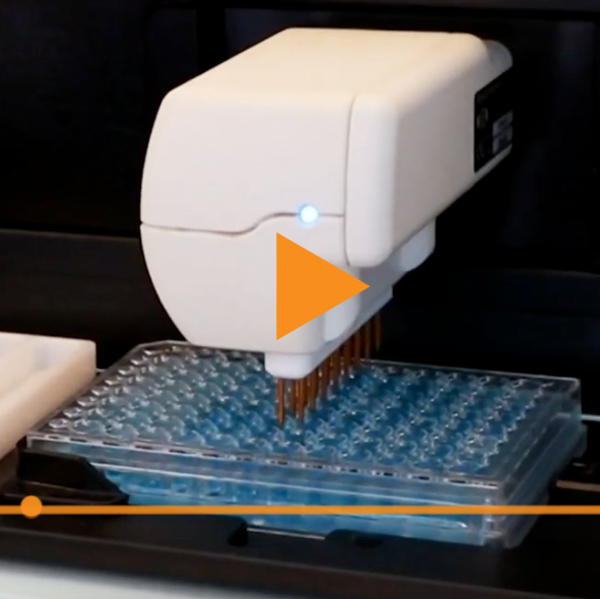
With the development of a High Throughput Screening (HTS) protocol for faster drug discovery, a new line of cell culture filter plates have been introduced by several major cell culture insert manufacturers. These HTS plates normally have either 24 or 96 individual cell culture inserts "bonded" together as one plate so that it can be handled by a robot apparatus. In response to these developments, WPI has developed an automatic REMS system and a manual electrode, STX100, for TEER measurements using HTS plates.
- - October 10, 2013
Transepithelial Electrical Resistance TEER measurements is the most convenient, reliable and non-destructive method for evaluating and monitoring the growth of epithelial tissue cultures in vitro. The confluence of the cellular monolayer is quickly determined by a sharp increase in TEER. TEER measurement technology, which was first introduced by WPI in the mid-1980's, has since been perfected and expanded to include a range of TEER related manual and automatic instrumentation, including:
EVOM² - Manual TEER measurement of epithelial cells in 24- and 96-well plates
REMS AutoSampler - Automated system for High Throughput Screening (HTS) - - October 10, 2013
WPI's EndOhm chambers were designed for making TEER measurement of endothelial cell cultures in individual cups. The EndOhm chambers feature:
Compatible with EVOM²
Improved accuracy of 1-2Ω
Accommodates 6mm, 12mm, 24mm cups and Costar Snapwell cup
Sterilized with EtO, alcohol or a bactericide - - October 02, 2013
See how simple it is to operate the new ATC2000 Animal Temperature Controller. The new adaptive mode takes the guesswork out of temperature control so you can focus on the details of your own experiment.
- - October 02, 2013
WPI surgical instruments were recently featured in a JoVE video that demonstrates a new method for cross pollinating grasses.
Jiang, H., Barbier, H., Brutnell, T. Methods for Performing Crosses in Setaria viridis, a New Model System for the Grasses. J. Vis. Exp. (80), e50527, doi:10.3791/50527 (2013).
- - September 15, 2013
- - September 15, 2013
The PSMB5N Surgical Microscope has a motorized focusing system that allows for hands free operation. It is lightweight, compact and easy to maneuver. Dual bulbs prevent illumination failure during surgery. It has an optional video adapter and five magnification steps. This video shows you how to assemble your microscope.
Safety is a primary concern when setting up equipment. Here are a few pointers.
- This setup requires open space to work in.
- Be sure to remove the packing materials as soon as you unpack your boxes.
- Watch your hands when you are using a box cutter.
- The articulating arm is spring loaded. Be sure to release the tension on it in a controlled manner.
- Be sure to remove all parts from the boxes before you throw the boxes out.
- The base of the microscope is heavy. It requries two people to remove the base from the box. If you drop the base, you will likely break the casters.
- Do not invert the microscope head with the eyepieces in place. They could fall out and are expensive to...more
- - September 02, 2013
WPI now offers suction tweezers that are ideal for picking up small objects with a flat surface. The Pickup Tweezers are perfect for handling and positioning coverslips, removing small tissues from a solution or manipulation of small electronic components. The Pickup Tweezers (#504523) require no power or batteries, and are safe from all electrostatic discharge. This kit includes the metal body (handle), a straight metal needle, an angled metal needle, three rubber cups (4, 6 and 9mm diameter) and a lubricant set. When your fingers are just too big, and standard tweezers are awkward, the Pickup Tweezers are perfect.
- - August 22, 2013
Researchers at the University of Michigan are using WPI's PV820 for injecting a morpholino solution into the lumen of the otic vesicle of 1-day old zebrafish embryos. Then, they use electroporation to introduce mif and mif-like morpholinos into the developing inner ear tissues.
Check out the JOVE video to see:
- How to make electrodes for electroporation
- How to setup the electroporation
- How to inject the morpholinos
- Examine some of the results
References
JOVE video: Holmes, K. E., Wyatt, M. J., Shen, Y., Thompson, D. A., Barald, K. F. "Direct Delivery of MIF Morpholinos Into the Zebrafish Otocyst by Injection and Electroporation Affects Inner Ear Development". J. Vis. Exp. (47), e2466, doi:10.3791/2466 (2011).
Warmerdam, T., Schröder, F., Wit, H., & Albers, F. (n.d.). Perilymphatic and endolymphatic pressures during endolymphatic hydrops. European Archives of Oto-Rhino-Laryngology, 260(1), 9–11. http://doi.org/10.1007/s00405-002-0518-2
Wei,...more
- - May 21, 2013

Recent Posts